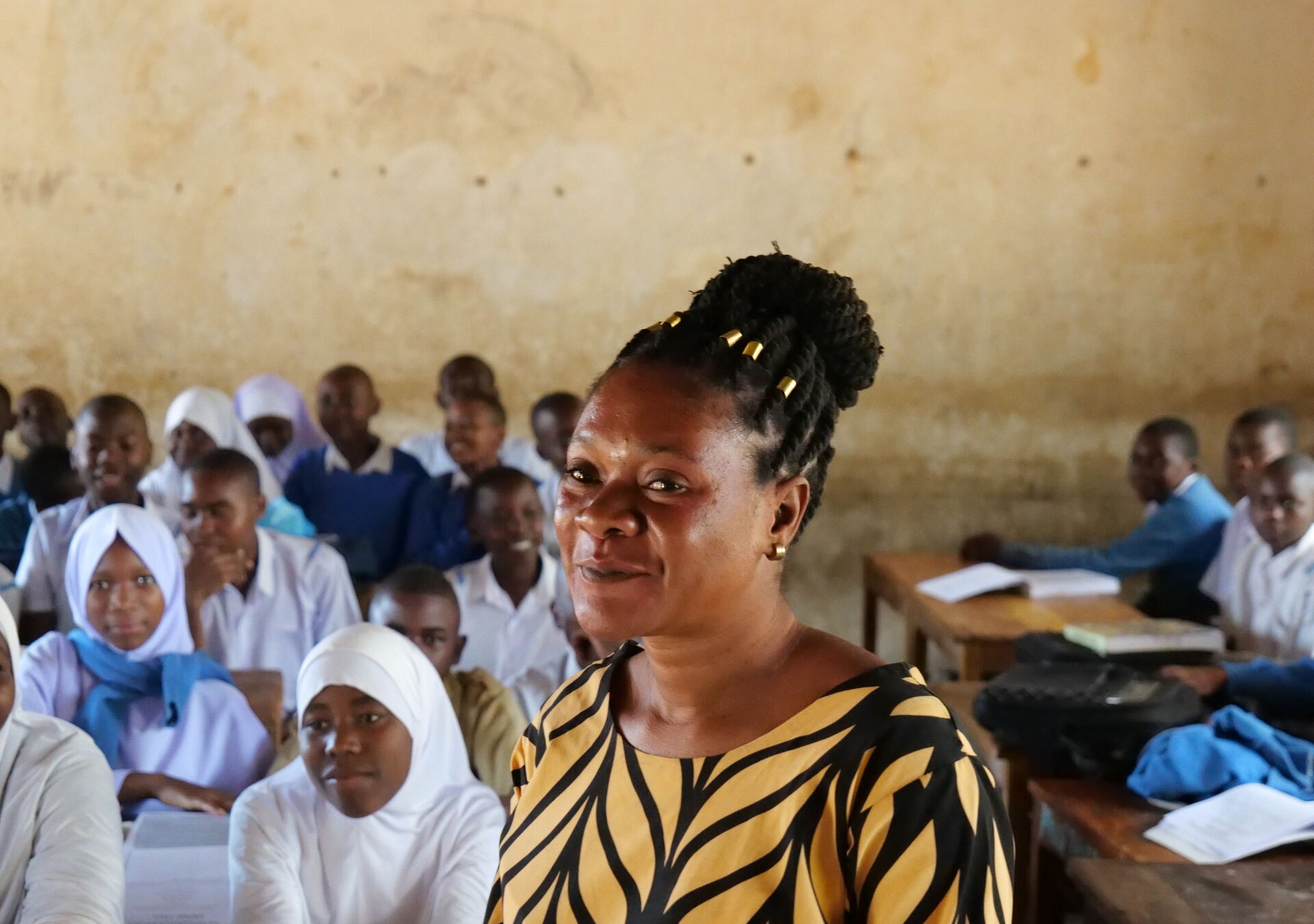
Secondary students at a school in Kilosa, Tanzania, during a My Better World life skills and wellbeing session led by a CAMFED Learner Guide. (Photo Credit: CAMFED/Abby Brooks)
Across Tanzania, schools collect large amounts of education data — from student attendance to exam performance and dropout rates. While this information is reported upwards through the system, there is an opportunity to do more to make sure it is also used regularly to inform decisions where it matters most: at the school and district level. To help address this, CAMFED launched a GPE-KIX funded research project in 2024, focused on ensuring that education data is deployed to improve learning outcomes and reduce student dropout.
This research investigated CAMFED’s Data for Education Excellence model, also known as Whole School Improvement Planning, which is designed to support schools and communities to tackle barriers to education, particularly for girls.
The model builds on existing education data systems, including Tanzania’s Student Information System (SIS). Developed by the Tanzanian government, the SIS is a digital platform that enables schools to capture and access data in real time. It can also be used as an early warning tool — for example, flagging when students have missed a certain number of classes so that teachers can follow up, understand the reasons behind absences, and work with parents to improve attendance.
Through the Data for Education Excellence model, school stakeholders gain new skills in analyzing available data to identify patterns in student outcomes, better understand the challenges learners face, and take targeted action to support those most at risk of dropping out. The model was co-created with experts from government (the Technical Working Group), schools, districts, and the communities CAMFED serves, ensuring it is responsive to local needs and contexts.
Working together to expand what works
Collaboration between government, school and district stakeholders, CAMFED, and Altamont Group has been central to testing and learning from the Data for Education Excellence Model. Through the Technical Working Group, government representatives helped deliver training, supported school monitoring visits, and engaged with teachers and school leaders as they applied the model in practice. Involving government stakeholders in this way underscored government ownership of the approach while ensuring that lessons from implementation were grounded in the experiences of those using the model at school and district levels.
As the project moved into its final stage, these experiences provided an important foundation for a broader conversation: what would it take to move from a successful pilot to wider adoption of the Data for Education Excellence Model across Tanzania’s education system?
To explore this, CAMFED and Altamont Group brought together government and school partners for a three-day scaling workshop. The workshop provided an opportunity to step back from the day-to-day implementation of the pilot, reflect on what had worked, identify the challenges that would need to be addressed, and collectively consider what would be required to scale the model.
The experiences of schools were central to the discussions throughout the workshop. One Head of a secondary school shared how, following the 2025 training delivered by CAMFED, the Technical Working Group and Altamont Group, his team responded to rising dropout rates by analyzing attendance data, mobilizing parents, engaging local and religious leaders, and systematically tracking unexplained student absences. Ultimately, this helped improve attendance rates. Other examples highlighted how schools were using data to identify learning gaps, provide additional support to students who were facing challenges, and respond to challenges in exam performance. Overall, schools shared that there has been a growing culture of asking “why?” when learning challenges arise, helping educators move beyond simply identifying problems to understanding their underlying causes.
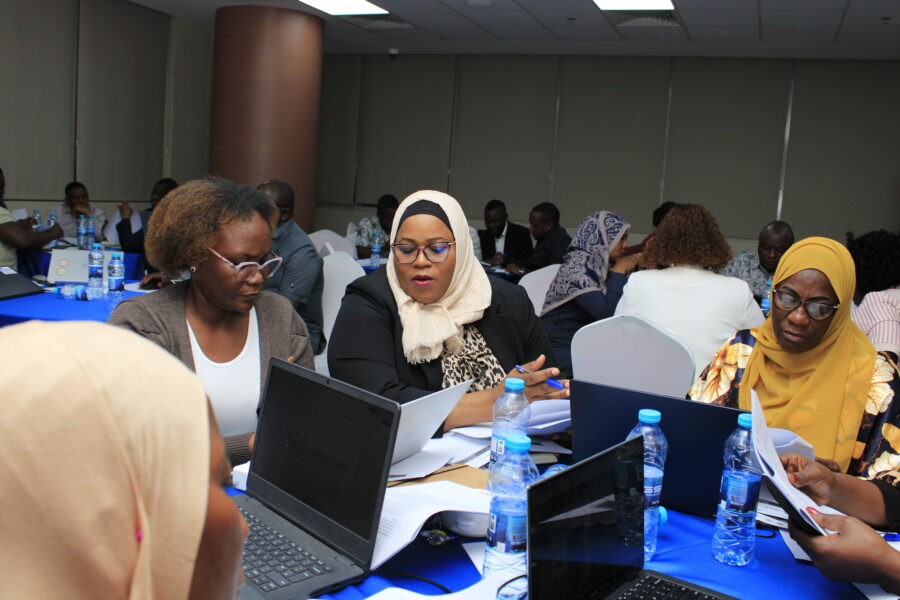
Stakeholders discuss their experiences during a scaling workshop in Tanzania (Photo Credit: CAMFED)
These experiences demonstrated how the Whole School Development Planning process, integrated within the Data for Education Excellence Model, can support schools to translate data into targeted action. They also helped ground the discussion about scaling in practical experience: rather than asking whether the model could work, participants were able to focus on the question: what would need to be in place to make this approach possible across more schools and districts?
The workshop was designed around finding the answer to this question. Rather than developing a scaling roadmap from the top down, the workshop drew on the experiences of those closest to implementation. On the first day, school and district representatives shared their lived experiences and lessons learned from putting the model into practice. Day two brought participants together to refine these insights and identify the key operational bottlenecks that would need to be addressed. Finally, on day three, participants brought these ideas together to develop a practical roadmap for system-wide scaling.
As the Chair of the Technical Working Group reflected, many of the most practical and actionable ideas came from school-level stakeholders, highlighting the value of an action-research approach in which recommendations are co-created by the practitioners who will ultimately be responsible for putting them into practice.
Insights from the workshop: what will it take to scale?
Over the course of the workshop, participants outlined the foundational requirements for expanding beyond the original 18 pilot schools. Their reflections helped identify the practical considerations that will need to be addressed as Tanzania looks toward wider adoption of the model.
- Infrastructure and Connectivity: Unreliable network coverage emerged as a primary operational challenge. Connectivity outages prevent schools from submitting real-time data to the School Information System (SIS), forcing schools to rely on paper-based processes that limit the efficiency gains of digital reporting. As one school head noted, poor connectivity disrupts both routine data uploads and the ability of trained staff to support other teachers in using the model. This ultimately makes it harder to expand the model to more schools. Several districts also identified persistent power outages as a significant constraint, since devices are sometimes uncharged and unusable. At the same time, there are not enough devices to meet the demand — in some cases, the number of trained personnel now appears to exceed the available supply of devices.
- Training and Ongoing Support: Participants emphasized that having access to a system does not guarantee that staff are able to use it effectively. As one District Education Officer noted, while every teacher is authorized to use the SIS, in practice only trained staff can upload data. This creates a dependency on a small number of trained staff, leaving entire schools vulnerable when trained personnel are transferred. Districts also reported a significant gap between data collection and data use; while data entry has become routine, data analysis skills take more time to acquire. To address this, stakeholders called for continuous support rather than one-off workshops, including updated user manuals and refresher modules alongside system enhancements. They also recommended expanding future training to include Ward Education Officers, IT and M&E personnel, and District Executive Directors, to ensure that key decision-makers can effectively leverage school data.
- Integrating Data Systems: Participants highlighted the importance of ensuring that the different systems used to collect and manage education data can work together. Currently, information may need to be entered manually across different systems, increasing the risk of incomplete or outdated records. Participants identified the need to connect the SIS with other existing systems, including the National Examinations Council of Tanzania’s online candidate-registration system (PReMS) and the annual school census, to improve the availability and accuracy of education data. Ministry representatives confirmed that technical integration between the SIS and PReMS is already underway.
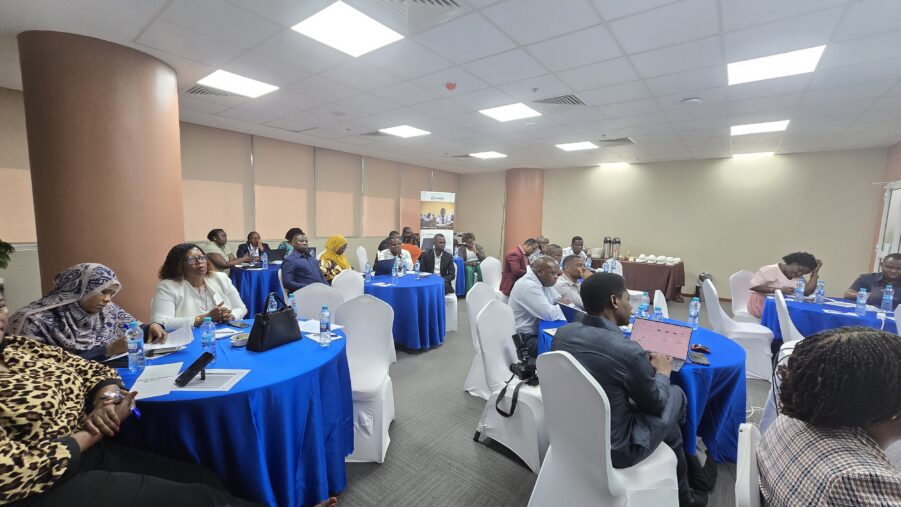
Stakeholders discuss what it will take to scale the pilot across Tanzania’s education system. (Photo Credit: CAMFED)
What comes next?
The project has demonstrated that strengthening education data use is not simply about improving the availability of data. It is about ensuring that teachers, school leaders, district staff, parents and government have the skills, systems, and support they need to turn that data into action.
Over the past two years, the Data for Education Excellence Model has provided a practical approach for bringing these elements together. Through the pilot, teachers and school leaders strengthened their ability to identify challenges using existing education data, develop targeted responses through Whole School Development Planning, and monitor progress over time. At the same time, the project has strengthened collaboration between government and school-level actors, helping to build ownership around the use of data for improving education outcomes.
The final scaling workshop marked an important transition: from testing and learning to considering how the model can be embedded within existing education systems and processes. The scaling roadmap developed with government and school partners provides a foundation for this next stage, identifying the investments, capacity, systems, and coordination required to move beyond the 18 pilot schools.

Secondary school students in Kilosa, Tanzania, benefit from the My Better World life-skills and wellbeing program delivered by CAMFED Learner Guides. (Photo Credit: CAMFED/Abby Brooks)
As Tanzania continues to strengthen its education data systems, this experience reinforces an important lesson: data has the greatest potential to improve education outcomes when it is placed in the hands of those closest to learners and supported by the systems and structures that enable them to act on it.
The work now moves beyond the pilot. The lessons, partnerships, and roadmap developed through this project provide a foundation for continued collaboration with government and education stakeholders to strengthen data-driven decision-making across Tanzania’s education system, and ultimately, to support better outcomes for children.