In this blog, we hear reflections from Festo Mboya, Monitoring Evaluation Research and Learning Manager at CAMFED Tanzania, and Anna Sawaki, Director of Programs and Partnerships at CAMFED Tanzania, on our journey towards improving data collection and analysis in schools.
Since 2020, GPE’s Knowledge and Innovation Exchange (GPE-KIX), in collaboration with Canada’s International Development Research Centre (IDRC), has supported strengthening data systems for education in low- and lower-middle-income countries. Working in close collaboration with government and school communities across Tanzania, CAMFED’s work seeks to harness the power of data and support improved learning outcomes, particularly for marginalized girls.
Across Tanzania, schools collect large amounts of education data—from student attendance to exam performance and dropout rates. Yet too often, this information is reported upwards through the system without being used effectively to inform decisions where it matters most: at the school and district level. To help address this, CAMFED (Campaign for Female Education) launched a GPE-KIX funded research project in 2024, focused on strengthening education data systems to improve learning outcomes and reduce student dropout.
CAMFED’s Data for Education Excellence model, also known as Whole School Improvement Planning, is designed to unlock the potential of both schools and communities to tackle barriers to education, particularly for girls. Through the model, school stakeholders are trained to analyze existing data to inform improvement planning. This enables them to identify patterns in student outcomes, better understand the challenges learners face, and take targeted action to support those most at risk of dropping out. The model has been co-created with experts from government, schools, districts, and the communities CAMFED serves, ensuring it is responsive to local needs and contexts.
Early evidence from the second year of the project shows that when school and district level educators are supported to analyze and use data effectively, it strengthens accountability, encourages community engagement, and contributes to higher student attendance and reduced dropout rates–particularly among marginalized girls. By deepening understanding of how education data can drive local decision-making, the project is helping to build more responsive education systems that support every student to learn and thrive.
Building government ownership through collaboration
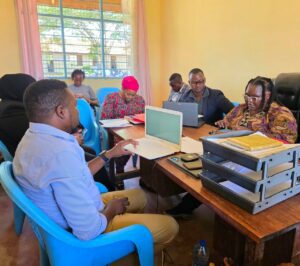
Through their involvement in the Technical Working Group, government representatives and school-level stakeholders partnered with CAMFED staff, and Altamont Group – the project’s regional research partner – to implement project activities. The Technical Working Group played a central role in co-delivering training for teachers and school stakeholders. Together with Altamont Group, they co-facilitated the training of 54 teachers from 18 Pilot study secondary schools piloting the training. Members of the Technical Working Group along with CAMFED and Altamont Group colleagues have also maintained regular engagement with teachers and school leaders through three rounds of school monitoring visits.
These visits created opportunities to observe how the model is being implemented in practice, engage directly with educators, and gather meaningful insights into how schools are using data to inform their actions. The Technical Working Group’s involvement has been critical in embedding strong government ownership and accountability for the innovation. The project has also given teachers the confidence that they are implementing systems and processes that are supported by the government.
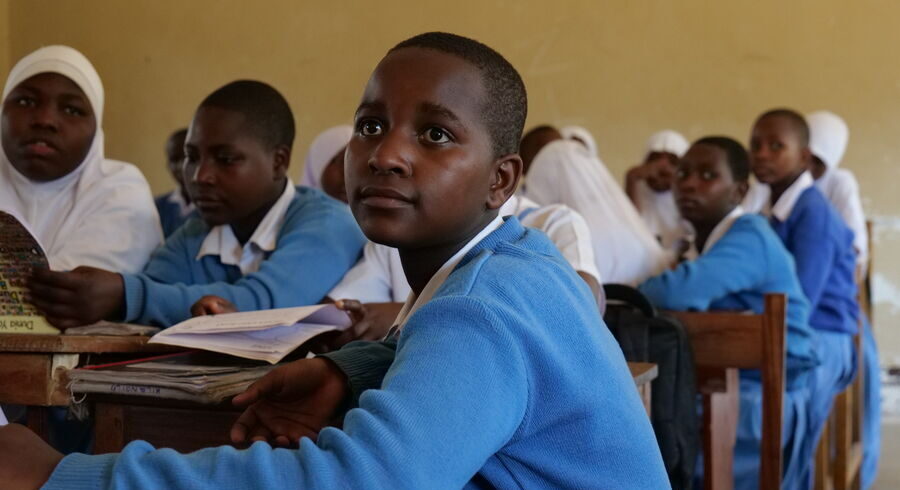
Secondary school students in Kilosa, Tanzania, benefit from the My Better World life-skills and wellbeing program delivered by CAMFED Learner Guides. (CAMFED/Abby Brooks)
Evidence from the project shows that working closely with the government has resulted in strong commitment to the approach, and helped scale the adoption of the “Data for Education Excellence” model within existing teacher training systems. For example, government partners have established resource teams, made up of experienced teachers who support the training of other teachers, with post-training monitoring supporting peer learning. Notably, these steps toward institutionalizing the model have emerged earlier than anticipated – with government leadership driving these changes forward. The approach has already expanded beyond the initial 18 pilot study schools, reaching more than 280 schools across 45 councils, demonstrating the government’s strong belief and commitment to sustaining and scaling the model.
Teachers leading change in schools
In addition to government-led scaling efforts, there has been strong uptake and ownership of the model among teachers at the local level, with teacher-driven scaling emerging organically beyond the project’s planned activities. Many teachers have proactively shared what they’ve learned with colleagues and teachers in nearby schools.
Formal communication channels were established during the training and facilitated by an expert from the Technical Working Group who trained the teachers, providing ongoing technical guidance and a structured space for engagement. Building on this foundation, teachers have also established informal support networks, using platforms like WhatsApp to exchange ideas, discuss challenges, and support each other in applying the model. This growing peer-to-peer collaboration is helping to build a strong community of practice, reinforcing learning and supporting the model’s continued adoption.
CAMFED staff, Altamont Group Researchers, the Technical Working Group and teachers during a school monitoring visit. (CAMFED/Edina Salila)
Survey findings show increased confidence among teachers in identifying and categorizing the causes of student dropout. Schools are strengthening how they record and verify dropout cases – making greater use of official definitions and systems to improve accuracy. Teachers now follow clearer processes – for example, contacting parents and confirming whether a student has transferred to another school, before categorizing a student as a dropout. The Student Information System (SIS), a government-developed digital platform in Tanzania that enables real-time data capture at the school level, also plays an important role as an early warning system. This system flags when students have missed a certain number of classes and prompts teachers to follow up and better understand the reasons behind their absence, and to work with parents to improve student attendance.
For teachers, this shift is already transforming day-to-day practice.
Before the training, I knew some of my students were falling behind, but I didn’t have a clear picture of who needed the support. Now, I review attendance, participation, and academic results together. This helps me identify patterns and intervene early. For example, when I noticed that a few girls were missing classes due to family responsibilities, we introduced peer support and flexible mentoring sessions to help them catch up.
Form Three teacher, Pilot Study School
This project is also shaping school leadership. In Pwani-Kibaha, one headteacher shared that using data has changed how they approach improving education outcomes. They can now identify gaps that were invisible before, such as learners who are underperforming and require additional, targeted support based on patterns in attendance and participation. The training, he notes, has given them the tools to make evidence-based decisions that directly impact their learners’ success – ensuring no student is left behind.
Building on these improvements in data use, teachers are increasingly applying a gender-responsive lens when analyzing school data. By examining patterns that reveal the barriers girls may face – such as household responsibilities, early marriage, or pregnancy – teachers are gaining a deeper understanding of the factors affecting girls’ participation in education. These insights are now being incorporated into school improvement plans, helping schools identify practical steps to create more supportive and inclusive learning environments for girls.
Lessons and challenges from implementation
The growing ownership of the model among teachers is encouraging.As theapproach continues to scale organically among teachers and more schools start using the Data for Education Excellence model, ensuring that key elements of the approach are applied consistently will be an important focus moving forward. The Technical Working Group will play a critical role in guiding this process, helping to support quality assurance and ensure the model is implemented as intended.
A key learning throughout this project has been the importance of deeper engagement with district-level education officials. While school leaders and teachers participated directly in the training, district officials – who play a key role in overseeing schools – were not originally part of the research design. Experience from implementation suggests that in future projects, ensuring that these officials, who facilitate engagement with schools, are more directly involved in stakeholder training from the outset could strengthen understanding, build even stronger commitment, and streamline collaboration.
A broader challenge identified during implementation was the limited availability of digital infrastructure. In some schools, there was limited access to digital devices, and challenges related to internet access or power cuts. In several cases, a lack of laptops and other digital technologies made it more difficult for teachers to fully engage with data collection and analysis tools. While this challenge extends well beyond the scope of the project itself, it highlights an important structural barrier to strengthening data use in schools. Encouragingly, many teachers and school leaders have demonstrated strong commitment to the initiative by seeking local solutions—some schools have even mobilized their own resources to purchase laptops in order to support the work.
Asha, a CAMFED Association member, with students she supports as a Learner Guide at a secondary school in Kilosa, Tanzania. They are holding the My Better World self-development workbook, created with and for young people in Africa. (CAMFED/Abby Brooks)
Looking ahead: scaling the model
With the project now entering its final phase, the focus will turn to scaling the Data for Education Excellence model. CAMFED, the Technical Working Group, and Altamont Group will work together to develop a scaling roadmap to guide the model’s expansion and long-term sustainability. This phase will begin with joint workshops bringing together project partners and government stakeholders to reflect on evidence and lessons from the pilot phase, and identify practical and sustainable recommendations for scaling the approach across more schools. As the model continues to evolve and expand, it offers a promising pathway for ensuring that education data is not only collected, but actively used to improve learning outcomes and better support the students most at risk of being left behind.
Read more about CAMFED's systems transformation work
Data for Excellence: Co-creating solutions to achieve equitable learning outcomes in Tanzania
Working in close collaboration with government and school communities across Tanzania to harness the power of data and support improved learning outcomes, particularly for marginalized girls.
Transforming education systems together: Delivering youth-led mentorship at scale
This video showcases learning about a collaborative research process co-led by CAMFED and government partners in Tanzania, Zambia and Zimbabwe being used to examine how an in-school youth-led mentorship program (Learner Guides) can benefit all students through integration into national school systems.