Donate

Supporting girls to learn, thrive and lead in Kenya

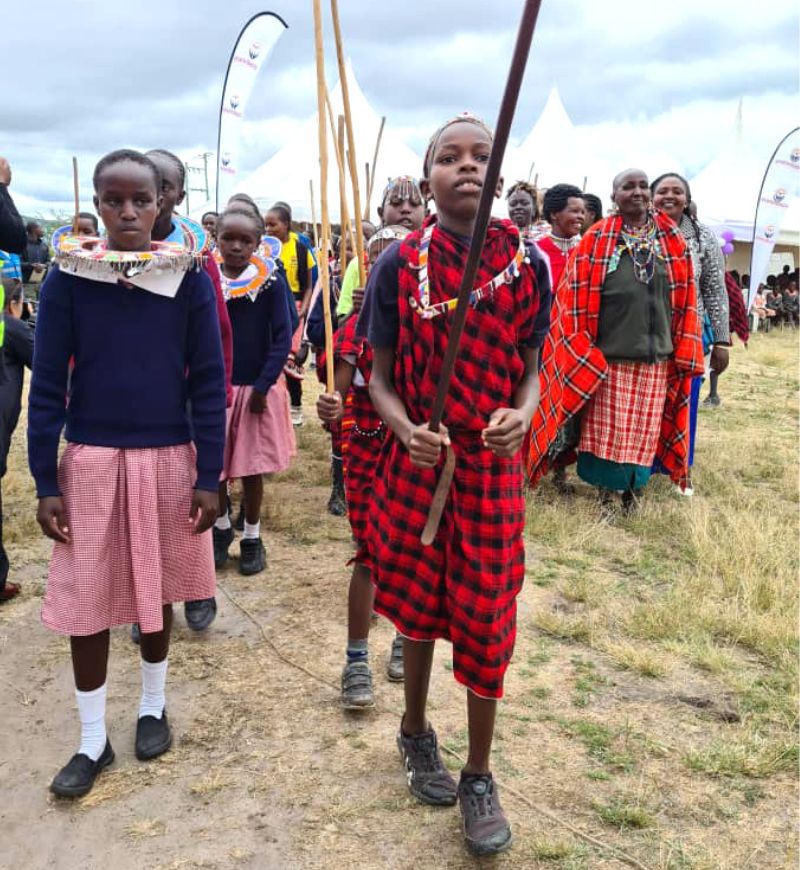
Poverty sits at the heart of girls’ exclusion from education in Kenya. In 2025, after extensive engagement with the Ministry of Education and a unique co-creation process involving girls and young women, communities, traditional leaders, school leaders, government officials and resource teams from all of our countries of operation, CAMFED—in partnership with the government—began by supporting 2,122 of the most marginalized girls to go to secondary school in Kajiado County. Here, the communities are mainly rural, and a significant proportion are nomadic.

Our work together is fuelled by the drive and passion of our network of young women leaders in the CAMFED Association, who are determined to tackle poverty-related injustices across the continent. Their lived experience uniquely positions them to dismantle the obstacles to education facing vulnerable children, and their action, philanthropy and leadership is uplifting entire communities.

I did not have the chance to go to formal school, but I value education greatly and have ensured that my children are in school. I’m dedicated to ensuring my children have opportunities I didn’t have.

Jane Natiyiayia Lesale, Community Leader, Kajiado

The challenges in numbers

The issues affecting the girls’ education are myriad and interconnected.

  • 20M

    An estimated 20 million people (39.8% of the population) in Kenya are living below the poverty line threshold

    Kenya Poverty Report 2022

  • 11%

    11 percent of 15 to 49-year old women in Kajiado (where CAMFED Kenya’s first clients are being supported) have no formal education, compared with 6 percent nationally

    Demographic and Health Survey 2022

  • 33%

    33 percent of 15 to 19 year-old young women in Kenya with no education have begun childbearing

    World Bank 2022

Image

Lack of financial resources but an abundance of community commitment

The extreme lack of financial resources in Kajiado is contrasted by a wealth of community and education ministry commitment to safeguarding the welfare of girls, and ensuring that they can access schools, learn, thrive, complete their education and transition to secure livelihoods.

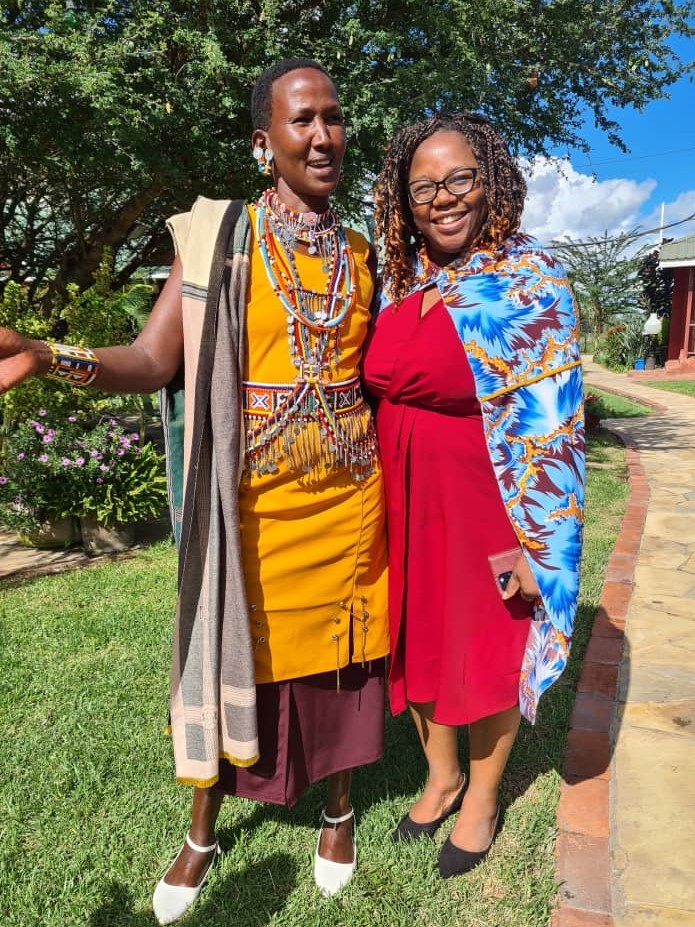
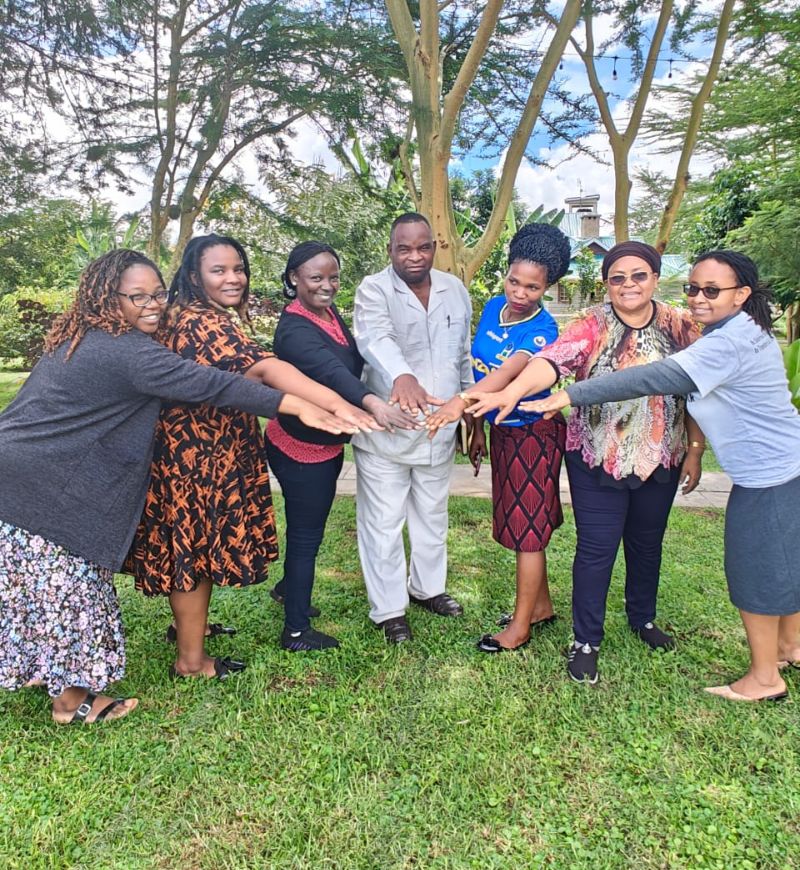
Village elder and community leader Jane Natiyiayia Lesale (pictured on the left with CAMFED’s Fiona Mavhinga) embodies this commitment.

Having experienced a lack of educational opportunities, early marriage, and the hardship that comes from bringing up children on her own after her husband’s passing, she is working tirelessly to improve educational outcomes in her community. She represents the government in the Nyumba Kumi Initiative for greater community security through cooperation with law enforcement, and has been a critical member of CAMFED’s National Resource Team that has been informing our expansion to Kajiado.

The barriers to girls’ education

The barriers to education for girls in Kajiado are multi-faceted.

Meeting school-going costs is extremely difficult for communities of nomadic cattle farmers. Their long-standing resilience is being severely threatened as droughts kill off livestock, decimate grazing land, and affect overall biodiversity.

With cattle and income under threat, families suffer food deprivation, as they don’t have subsistence farms to fall back on. Rates of HIV/AIDS and related deaths are alarmingly high, resulting in many children losing one or both parents and girls being left to take care of their siblings. Many girls lack both the financial and psycho-social support they need to stay in school.

Schools are extremely far apart, and students typically need to board because of distance, a lack of passable roads and transport. Day secondary schools face significant challenges due to limited resources and high student enrollment, often resulting in teacher-to-student ratios as high as 1:70 to 1:90—something which the government is seeking to address through an increased investment in teacher recruitment.

In the short to medium term however, the uplift in enrolment places considerable strain on both educators and existing infrastructure, such as classrooms and sanitation facilities. As a result, it becomes difficult for schools to fully address the specific needs of girls—such as menstrual health support and safeguarding—as well as to provide inclusive support for students with special educational needs, especially in the absence of appropriate facilities, supportive learning environments, and specialized training for teachers.

In addition, students from disadvantaged backgrounds often lack role models who have completed their education and gone on to seize leadership or professional opportunities in the community.

CAMFED picks a girl without looking at whether she has the best of grades. We want to empower a girl, any girl. Other parties are looking for this girl with 350 marks, 300. So the girl with 100 marks is neglected...These are the exact girls that CAMFED is looking for. So as a person that has worked with the community, I have already felt that everybody is excited with CAMFED because it is an organization with a difference.
Mackline Nyakango, Head Teacher
Image

Young women’s expertise at the heart of our expansion to Kenya

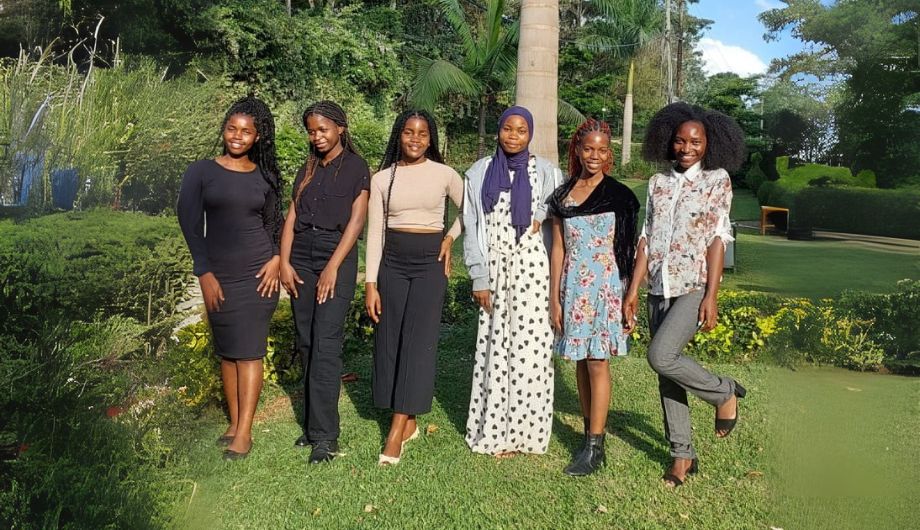
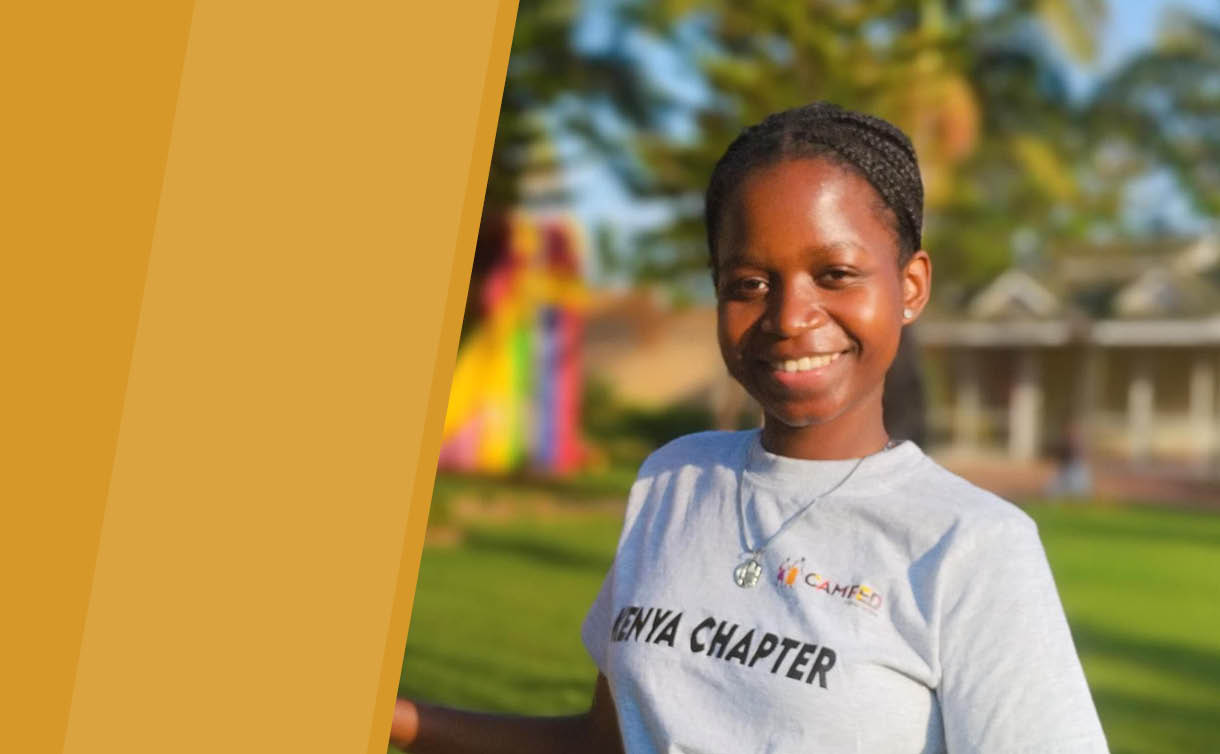
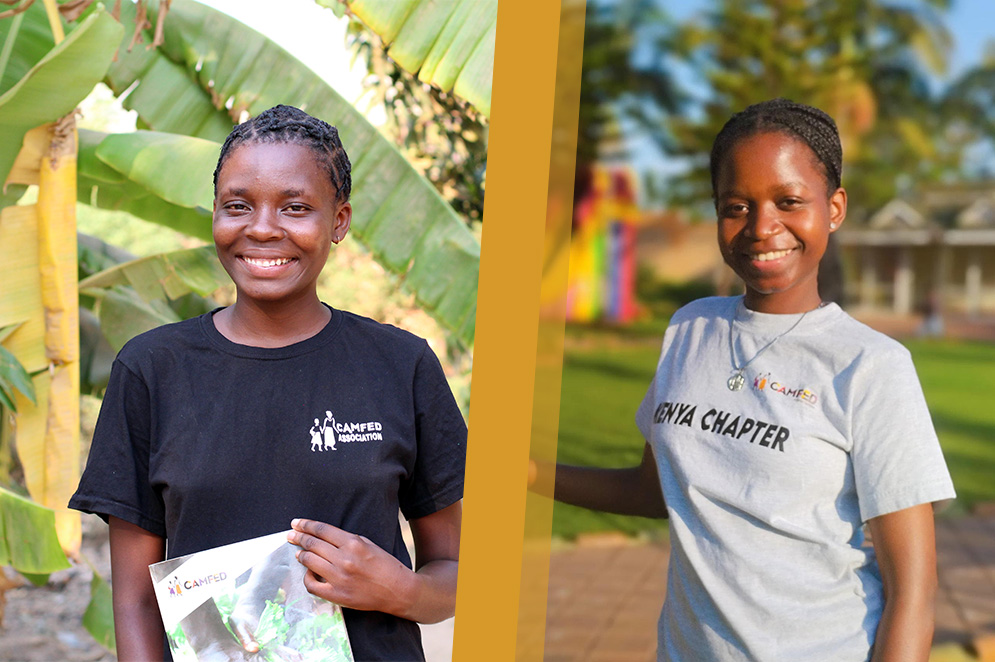
Experts in the CAMFED Association of women leaders educated with CAMFED support from across the African continent joined the regional and national resource teams that were set up as part of the expansion process, bringing their lived experience and expertise in overcoming the barriers to education. They have been welcoming new sisters from Kajiado, and joining our learning journey as we identify the unique socio-emotional and educational challenges faced by girls in rural Kenya. Together with ministries and community leaders, we are now investing in the continued development of the social support structures that enable vulnerable children to succeed in school – including training Teacher Mentors to provide counseling support and investing in Parent Support Groups, which can help address hunger and provide guidance to girls who have lost or are separated from family members.

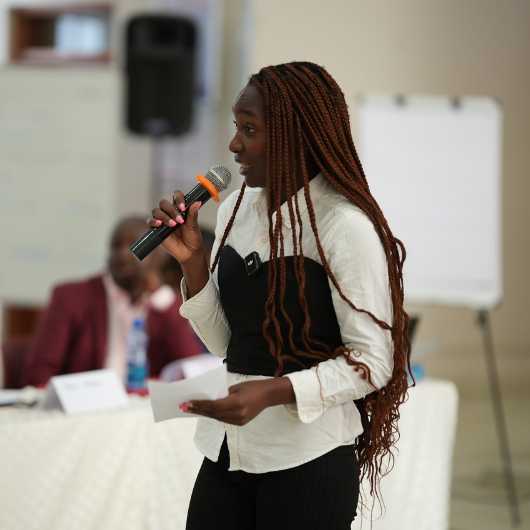
I know that the true power of girls’ education lies not just in individual success, but in a transformative effect that uplifts families, propels nations towards positive change and helps communities to flourish. Through the CAMFED Association, we have turned solidarity into a force that uplifts millions. When women lead together, we don’t just change the story—we become the authors of the story.
Leah Jamilton, Chapter Chair, CAMFED Association, Kenya

CAMFED Kenya in numbers

  • 2.1K

    Since the start of 2026, CAMFED supported 2,122 girls to go to secondary school providing holistic support that might include school or exam fees, uniforms, menstrual supplies, books, pens, bikes, boarding fees or disability aids.

  • 163

    We’ve trained 163 government teachers as Teacher Mentors to provide additional psycho-social support to our clients

  • 715

    Our new movement in Kenya has grown to 715 CAMFED Association members. Young women in this powerful peer support network spearhead our programs and help more vulnerable children to go to school.

  • 86

    CAMFED Kenya supports the education of vulnerable children in 86 government schools.

Recent News and Stories from Kenya

Story-hero-Shamim-Chuwe-895264-CAMA-GPE-Youth-Leader-Kenya-2025_IMG-20250324-WA0364-e1747301152608

StoryKenya

Shamim: Soaring as an education and mental health advocate

Having completed secondary school in Malawi with CAMFED’s support, I’m now an unstoppable leader–driving transformation alongside my sisters in Kenya.

Cleopatra-Chisanga-1032781-Shamim-Chuwe-Shamim-Chuwe-895264-CAMA-GPE-Youth-Leaders-May-2025

NewsGlobal

CAMFED graduates named Global Partnership for Education (GPE) Youth Leaders for 2025

Cleopatra Chisanga and Shamim Chuwe, two unstoppable leaders in the CAMFED Association, step up as Global Partnership for Education (GPE) Youth Leaders.

Thank you to our generous recent donors

Together we are breaking the cycle of poverty

Donate

Jennifer Deegan £21

Amit Roy £12.70

Peter Weis $106

Sharon Wilson $75

Burkinos Marantz €60

Giulia Mulder €10.80

Lili Giacobino £250

Craig Gason $300

Robert Dobbie £100

Arthur Freierman $158

Denise Anderson $251

Susan Kath $500

Kate Machin $16

Janet Oude alink $232

Christopher Connolly $106