Across Africa, including here in Ghana, steady jobs are scarce and many young people — especially those from disadvantaged backgrounds — face an uncertain future.
The Government of Ghana has introduced policies to address this challenge, including implementing the National Green Jobs Strategy (2021-2025), to provide training and generate job opportunities in green industries. In turn, young people are stepping up to drive innovation and shape a greener, more sustainable future for us all.
A collaborative research project led by CAMFED and the Institute of Statistical, Social and Economic Research at the University of Ghana, has captured the inspiring journeys of those who are seizing new opportunities. With determination and the right support, young women and men are building enterprises, championing environmental sustainability, and creating jobs for themselves and others.
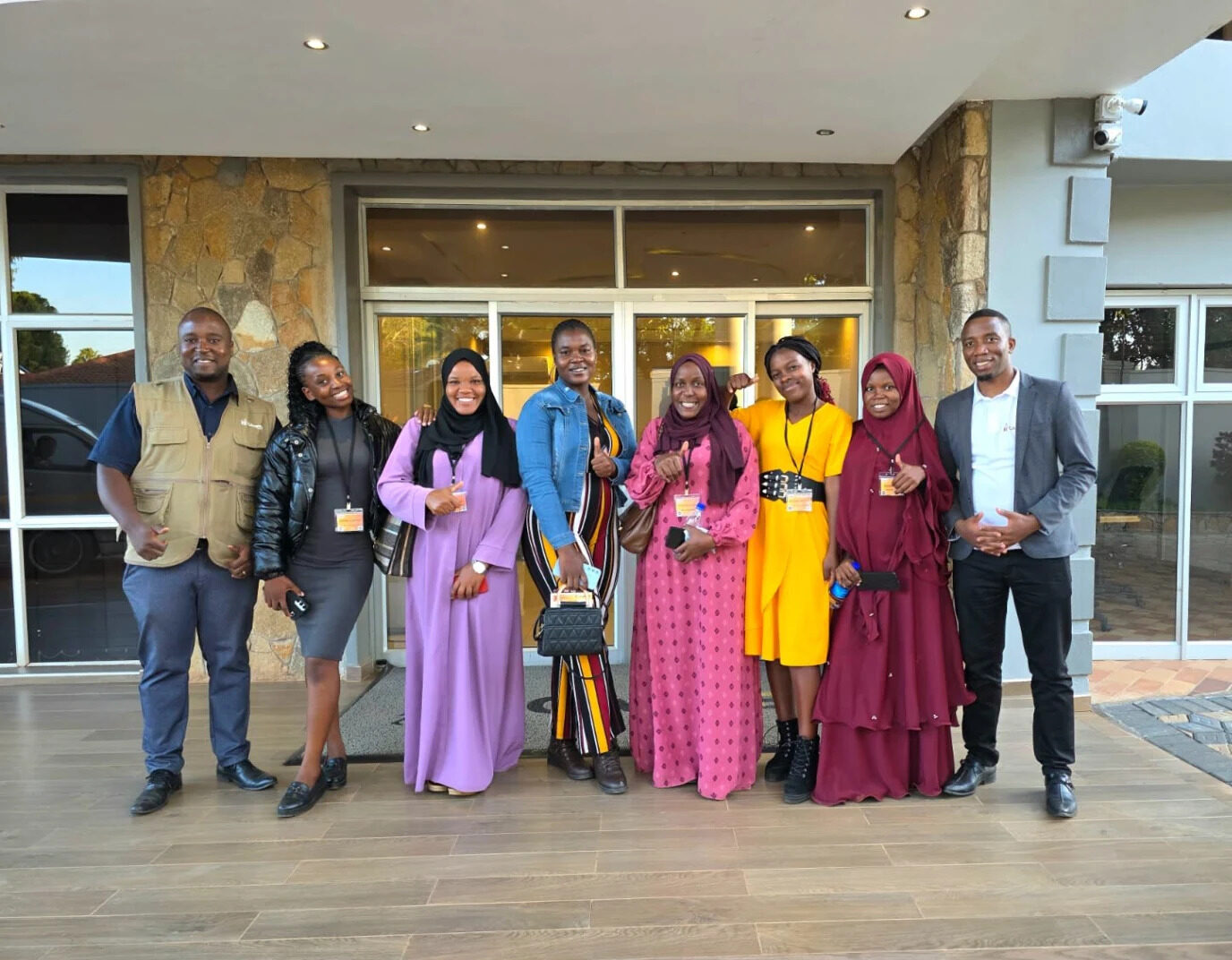
As co-youth researchers for this study, we have supported its design and participated in data collection, analysis, and report writing. We interviewed three young people — running enterprises in waste segregation, animal husbandry, and plastic recycling — to better understand their journeys into the green jobs space. Our questions focused on:
their pathways through education and/or employment
what motivated them to pursue their green business ventures
what challenges they faced and how they overcame them
what successes they achieved and what they are most proud of
their aspirations for the future of their businesses and of Ghana
Hear from some in our group (Comfort, Madonna, Shadrack and Elizabeth) directly, as we speak about our experience as youth researchers
Now hear from the three young people we interviewed:
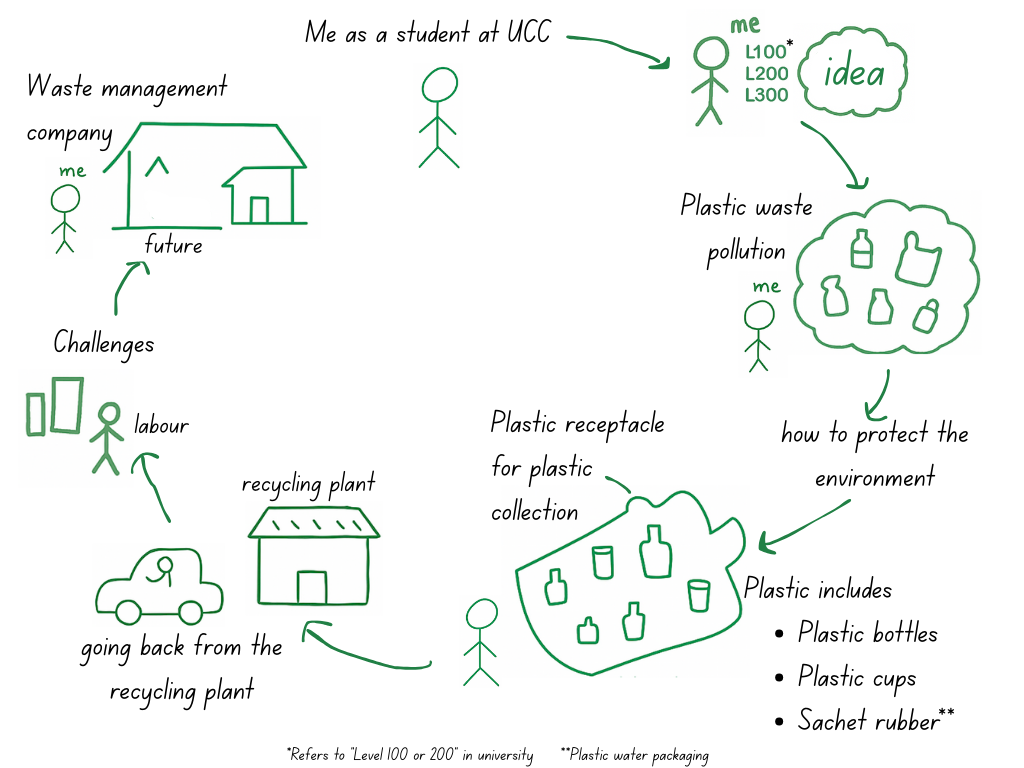
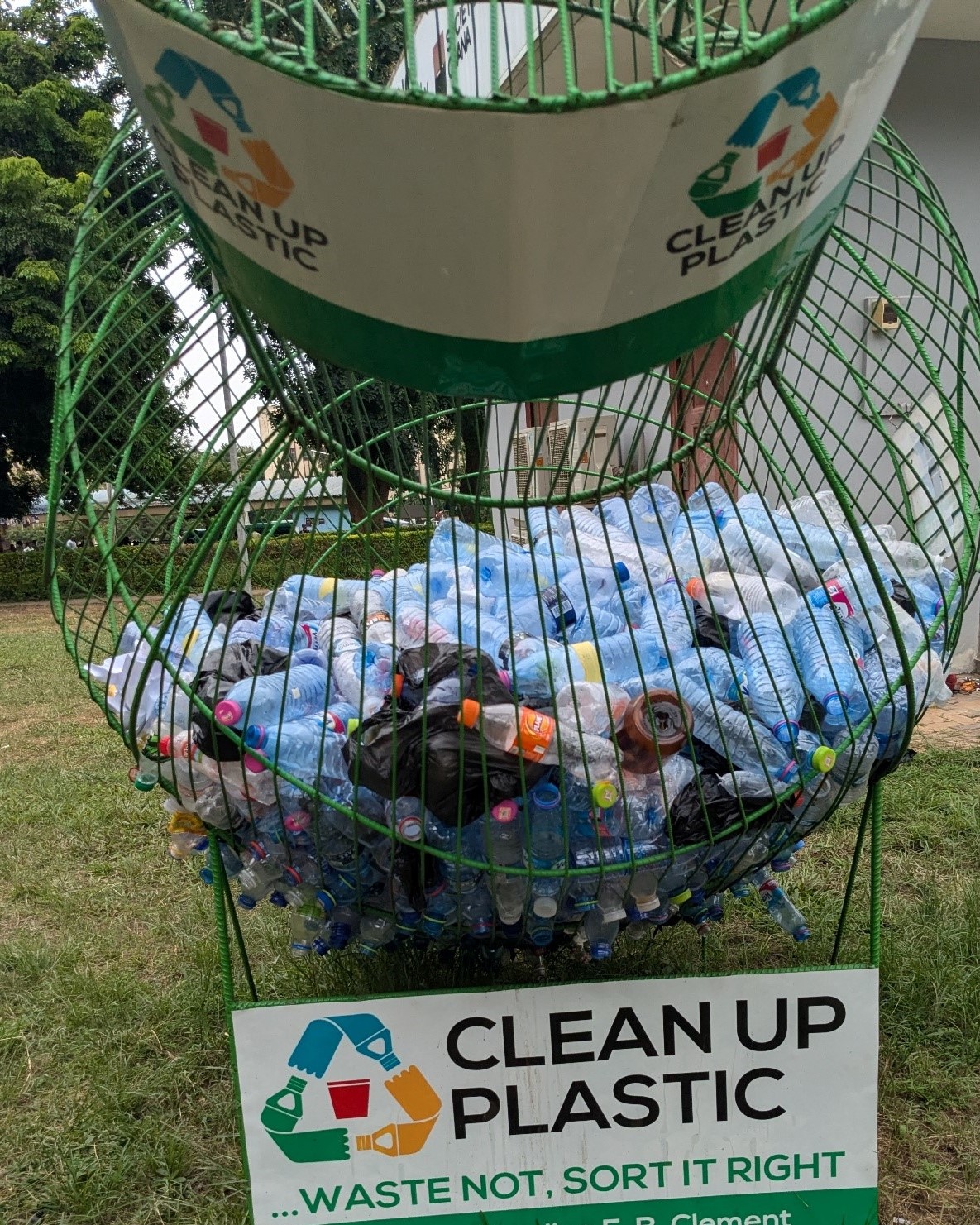
I am a university student pursuing a BSc in Environmental Science. My degree has helped ignite my strong commitment to environmental sustainability. In my third year at university, I identified a link between waste accumulation and the spread of diseases. This motivated me to launch an initiative to clean up the area and establish a waste segregation system on campus.
An illustration of Caroline’s journey to becoming a waste separation expert*
Caroline on her challenges, opportunities and hopes
Challenges emerged for me when some individuals began misusing the receptacles for organic and other non-plastic waste, disrupting the separation process. Finding funds for additional containers has also been a constant challenge.
Despite these setbacks, I’ve remained committed to expanding my project across campus.
It’s been great to see my vision become a reality and fellow students readily participating in the eco-friendly practice of waste separation.
I envision a future partnership with a recycling facility to process the collected waste into reusable resources, thereby reducing environmental impact.
Looking ahead, I hope to establish a plastic recycling company focused on community waste segregation and recycling.
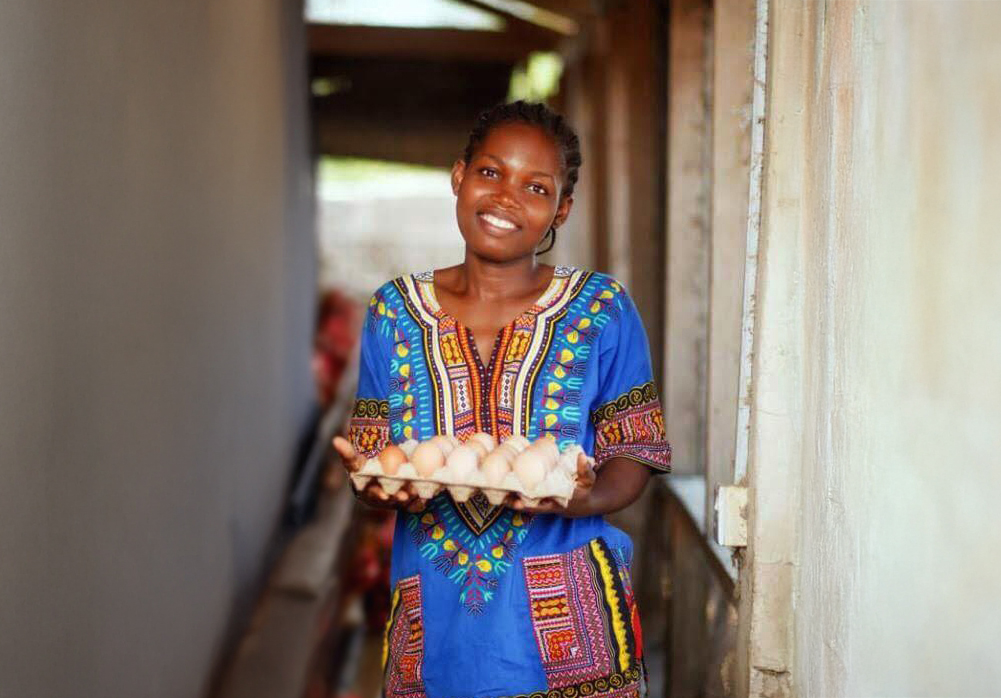
I pursued a degree in social sciences (Sociology) at the University of Cape Coast. Afterwards, I knew I wanted to focus on solving a real problem in my community, with sustainability at the heart of my business model. I decided to go into animal husbandry and establish my own poultry and piggery business, as a way of providing financial stability for myself and my family.
My interest in this field was sparked by a desire to contribute to food security, sustainable farming practices and rural development. I decided to learn methods that improve productivity while protecting the environment. It’s my way of showing young women what is possible when we strike out into entrepreneurship! This work can be rewarding both personally and commercially.
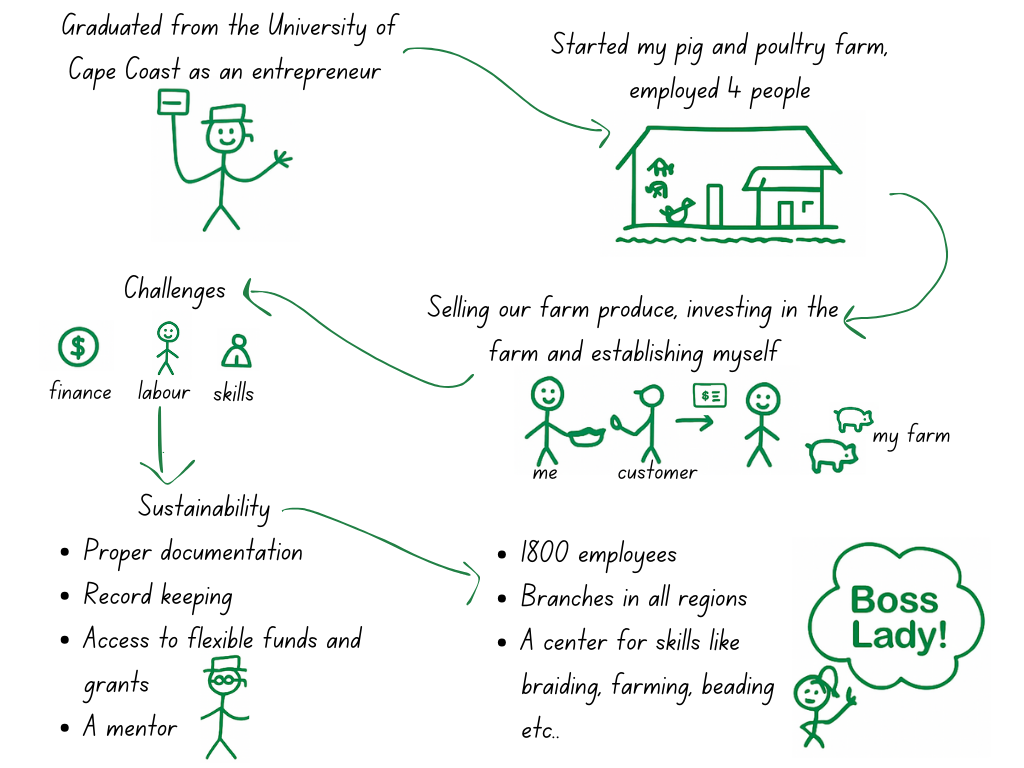
An illustration of Hannah’s journey to becoming an animal husbandry expert*
Building a strong network of mentors, customers, and fellow entrepreneurs has helped me navigate challenges with resilience.
Hannah, Ghana
Every business comes with its share of challenges, from limited access to finance to market fluctuations, climate-related risks to human resources issues. I have been overcoming these by focusing on innovation, resourcefulness, and proper management.
I adopt cost-effective feeding strategies, invest in animal health management, and rely on technology and training to improve efficiency. Building a strong network of mentors, customers, and fellow entrepreneurs has also helped me navigate challenges with resilience.
Through my enterprise, I have inspired other young women to go into animal husbandry. I tell them to look within for self-motivation and determination to succeed, as well as seeking outside opportunities, such as access to grants and loans.
With the necessary support, I’m going to be reaching for big dreams including expanding my business to employ thousands of young people and stimulate local economic growth. I aim to establish a farm training center to share knowledge, empower others, and strengthen agricultural skills in the community.
My vision is to build a model that shows how agribusiness can be both profitable and environmentally responsible. I’d also like to continue developing as a role model, inspiring a new generation of “Boss Lady” entrepreneurs!
My advice to other young entrepreneurs is to start small, stay consistent, and think of long-term sustainability. You don’t need all the resources at once to make an impact!
Hannah, Ghana
Jolly, former Human Resources associate – Plastic Recycling Project
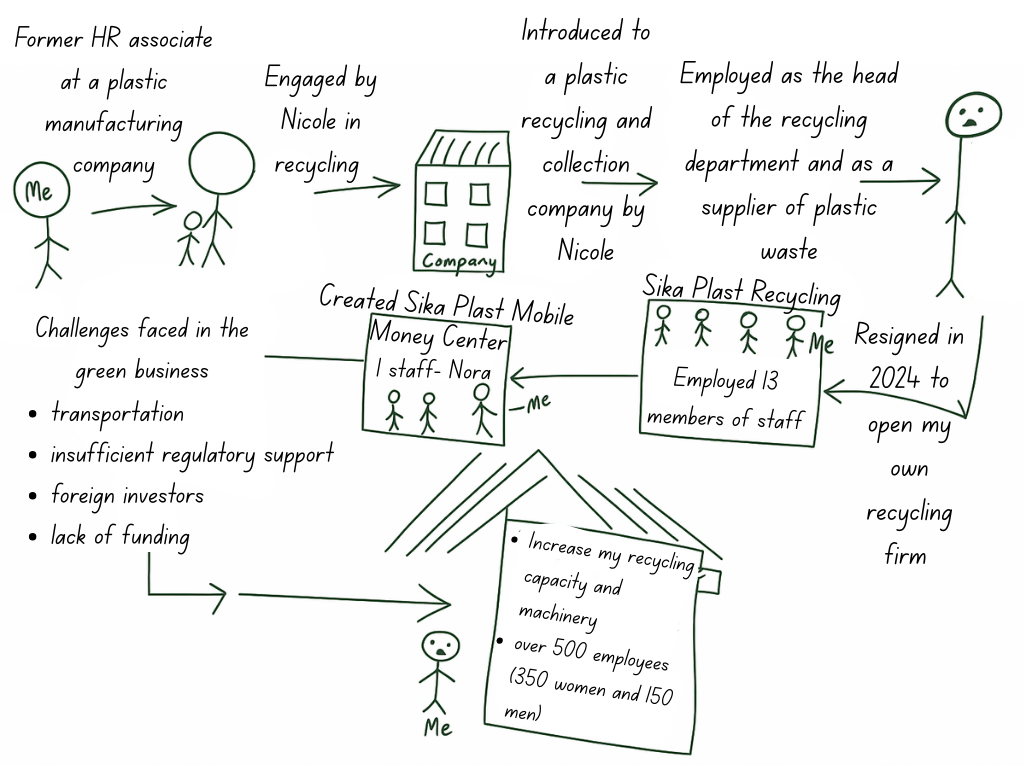
I started my professional journey as a Human Resources associate at a plastic manufacturing company. Though the role provided stability, it was a chance encounter with a friend that set me on a new path, one that aligned more closely with my passion and purpose.
Once my friend had introduced me to the world of recycling, my eyes were opened to the potential of the circular economy and the recycling value chain. Initially I secured a job as head of the recycling department at a waste management company. However, driven by an entrepreneurial spirit, I decided to resign from this job and launch my own venture.
An illustration of Jolly’s journey to becoming a plastic recycling expert*
Jolly on his setbacks and successes
I have had to navigate limited transportation options, insufficient regulatory support, stiff competition from foreign-owned firms, and chronic underfunding. To overcome this, I have worked to build trust with our waste aggregators, allowing us to make payments after selling our products. In addition, we have made progress in educating communities on waste segregation and training aggregators on recyclable materials.
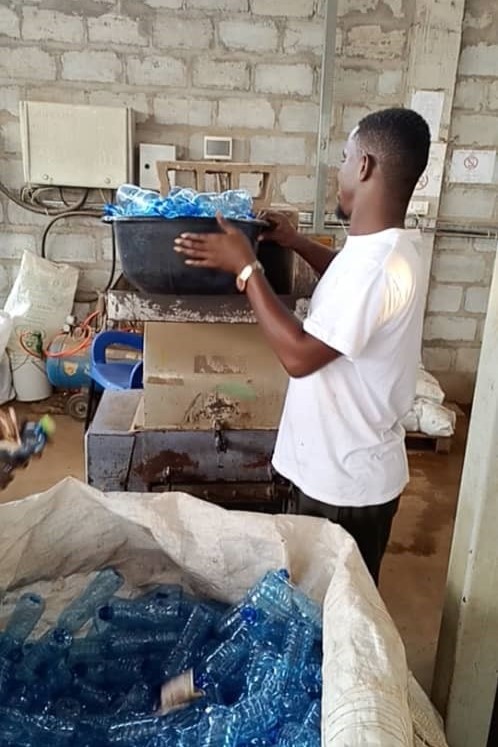
I am proud to be able to employ 13 other people. What started as a small operation with just one employee at the plastic recycling center has grown into a beacon of innovation and hope in the recycling industry.
My aim is to expand my company’s recycling capacity, modernize our equipment and create more jobs. My goal is to have 500 employees, who are mostly women. It’s my mission to empower communities, protect the environment, and lead the way toward a more sustainable and inclusive green economy in Ghana.
I am dedicated to creating a positive impact by solving employment issues and fostering self-sufficiency, ultimately giving people the chance to become valuable contributors as well as to address environmental issues.
Jolly, Ghana
*Generative AI has been used to help digitize hand drawings. Careful human oversight and attention was taken to ensure that the original markings, words, and intentions of the participants were preserved.
More from young innovators who are blazing a trail across Africa
Here, the University of Cambridge reflects on the continued impact of the Green Jobs and Young People Project. They share the ongoing work from our partners to disseminate the findings of the project, and reflect on the work conducted by all involved.