
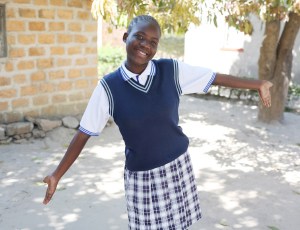
Spark Change Today
Support our end-of-year appeal and help change the story for girls for generations to come.
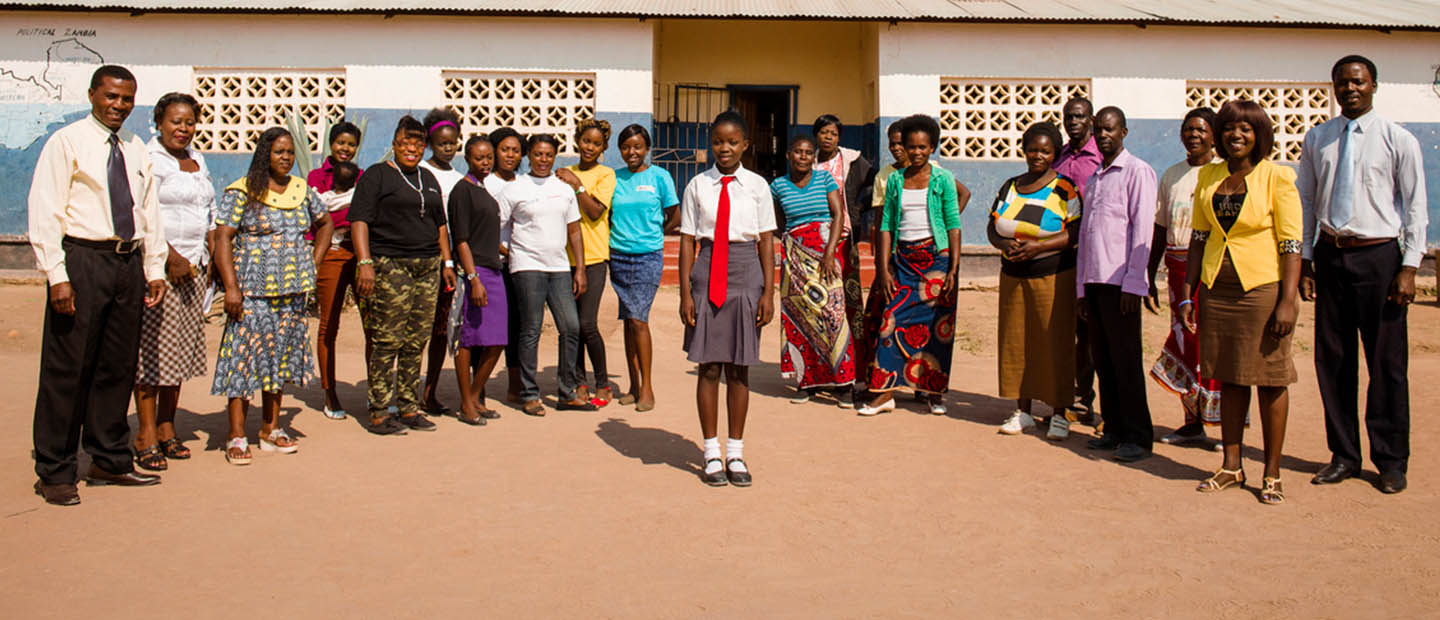
This new report draws on existing evidence and innovations — from education and other sectors — that point to how the wider community can work together to achieve SDG4, and, as a consequence, other global goals.
CAMFED’s programs are designed around the recognition that communities play an important role in the education ecosystem, as part of the extended education workforce. We invest in their activism and recognize their expertise and deep insight into the local context. Together, we are supporting girls to succeed in education and in life.
Lucy Lake, CEO, CAMFED
Right now the world is not on track to achieve SDG4. 260 million children are out of school, and more than 600 million children are in school, but not learning the basics, leaving them without the adequate skills or knowledge required to thrive now and in the future. The report underscores teacher quality as the most important determinant of learning outcomes at the school level, but in many countries teachers are in short supply, isolated, and not supported to provide effective teaching and learning.
CAMFED contributed to the Education Commission Report, and shared its model of girls’ education, a holistic, grassroots-led approach delivered in partnership with departments of education, which recognizes and positions communities as stakeholders in the success of their children – in school and after school.
CAMFED invests in an education ecosystem, formed not just of a ‘workforce’ of teachers, but also of activists embedded in their local community, with members of the CAMFED alumnae network, CAMA, now spearheading our programs:
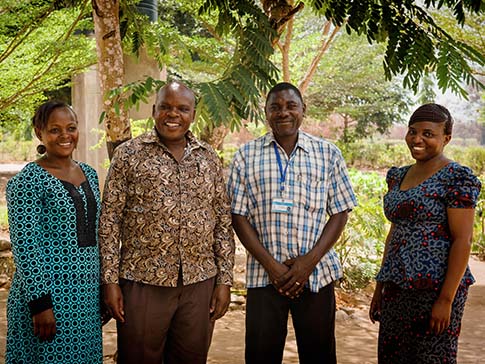
Part of the CAMFED ‘education workforce’: A parent support group member, an education official, a school headmaster and a Teacher Mentor.
Through our partnership with departments of education, we are working to scale programs that improve the quality of education for all, led by educated young women whose own experience of exclusion means that they know how to reach out to the most marginalized children, because the success of those who are hardest to reach is an important barometer for the success of an education system as a whole.
Read the Education Commission report: Transforming the Education Workforce: Learning Teams for a Learning Generation
Ann Di Sciascio $5
William Parrish $26.60
Muniza Khan $16.10
Pennie Warwick $21.40
Violette Blumenthal $10.90
Ronda Williams $60
Julie Ahringer £15
Claire Wilshaw £196.80
Claire Wilshaw £49.05
Melodee Lewis $52.90
Yingyu Li $20
Diane Kelly $16.10
Corliss Harmer $16.10
Sahand Zanjani Pour £10.60
John Selby $60
Spark Change Today
Support our end-of-year appeal and help change the story for girls for generations to come.