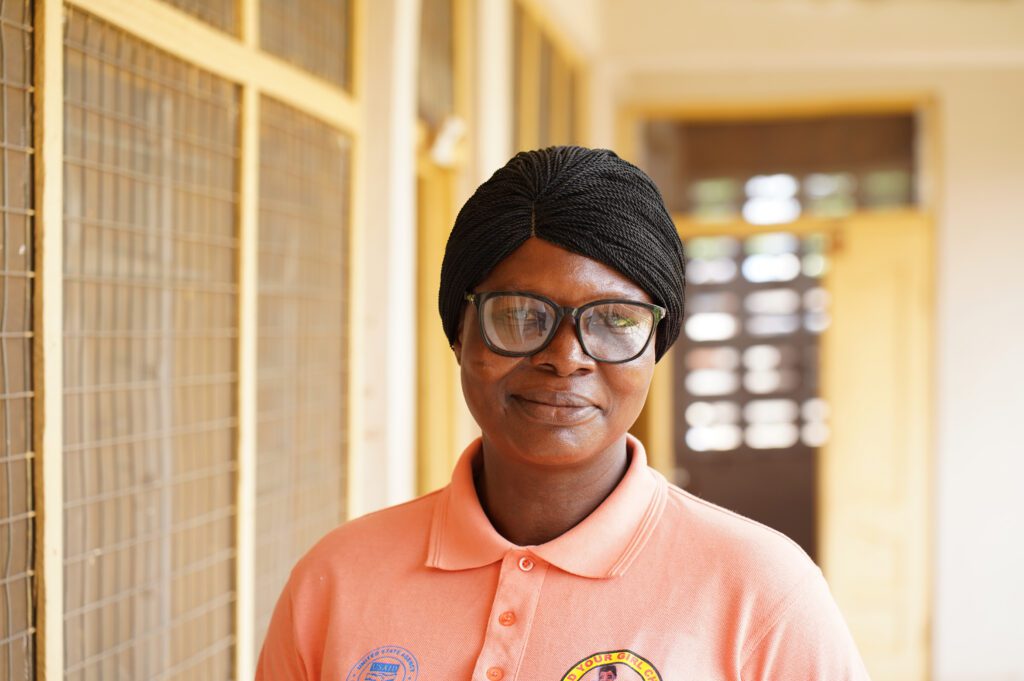
Rita Abamah, Girls’ Education Officer in Bongo district, Ghana recently spoke to CAMFED’s Cat Cardwell about her work advancing girls’ education in Bongo district.
Cat: Could you please introduce yourself, and tell us a little bit about your role?
Rita: My name is Rita, and I’m in charge of girls’ education in Bongo district, Ghana.
In 1997, the government of Ghana introduced Girls’ Education Units at district level to increase the opportunity for girls to access education. I am in charge of the government unit that ensures girls also have the opportunity to access formal education.
Cat: Why did you decide to do this job?
Rita: Growing up, it wasn’t easy for me to have an education. In our time, when there was no Girls’ Education Unit, many girls were out of school as families could not afford to pay school fees. I took on this role so I could share my experience with girls, and encourage them that they too can complete school and be responsible in future.
Cat: What kind of challenges do girls still face staying in school?
Rita: Even though school fees have been abolished in Ghana, girls face a lot of challenges. Families on low incomes struggle to cover school-going costs, such as uniforms, books, stationery, and menstrual products.
The school environment may not be conducive for girls to stay in school. For example, some schools may only have one toilet and one urinal, which means boys and girls have to share facilities.
Teaching methods can also be a challenge. Teachers are often expected to use the same approach for both girls and boys, even though their experiences and needs in the classroom may differ. As part of our campaign, we encourage teachers to use a variety of teaching methods and ensure their lessons are gender sensitive to consider the needs of both girls and boys.
Girls still face a lot of challenges, but we are trying bit by bit to address them.
Cat: When we arrived, we saw you speaking with students who had brought their babies to school and encouraging them to return to their studies. Can you explain the process of how you identify these girls, reach out to them, and support them to come back to school?
Rita: We monitor the schools from time to time, visit them, and ask, “Are your girls all there? Are they doing well? Are there other challenges that we need to know and help address?” For any girls who are pregnant, we offer them advice and counseling to support them to stay in school.
We also identify girls who have dropped out of school due to pregnancy, and serve as a crucial link between home and school. We encourage schools to maintain contact with parents, and sometimes we visit girls at home to reassure them that they can still succeed and return to school.
With the support from parents, the school and all of us at the Girls’ Education Unit, girls can still achieve their dreams.
Cat: And how often do the girls come back to school after you’ve spoken with them? Rita: With some girls, they are able to return to school because their mothers are able to care for their babies.
But sometimes a girl has nobody to take care of the baby, so it becomes a challenge. That girl may have to wait.
If you identify a girl that is maybe in Form 3 and is pregnant or has given birth, because that girl is in the final year, you have to take a different strategy.
For example if a girl is in junior high, she has registered to write her final exams. What we do is identify a kindergarten close to her school. Then, we appeal to the kindergarten and ask them if they can help take care of the baby, because nobody in the family is able to. And many of our kindergarten teachers are able to help girls write their final exams in this way.
Cat: Could you tell me about your relationship with CAMFED, and the work you do together? Rita: My relationship with CAMFED began way back in 2011. Then I wasn’t even the Girls’ Education Officer – there was somebody else doing it. But I was working closely with that person. And then in 2012, that person retired and I took over. I’ve been working with CAMFED since then.
We have the opportunity to select the most vulnerable girls and support them with education materials so they can complete school. Through CAMFED, I participated in training on how to guide and counsel our students, and how to offer support most effectively.
Photo Credit – Christopher Loades for CAMFED
Cat: You’re also a part of the District Education Committee (DEC). Could you tell me a bit about your role on the committee, and the purpose it serves?
Rita:Right from the time I took over as the Girls’ Education Officer and joined the committee, I was elected as the Treasurer for the DEC. So I’m part of the team responsible for allocating all funds being sent to the district by CAMFED.
As the DEC, we sit down together each year and plan our activities – in the community and in schools – carry them out, and then report on them.
When it comes to identifying students who would most benefit from CAMFED’s additional support, we come together with the CAMFED Association – young women leaders educated with CAMFED’s support – and visit schools. We work closely with CAMFED Association members on programs they want us to be part of. They can come to us when they need advice or support.
Cat:And so could you tell me about CAMFED Learner Guides and how you work with them as well?
Rita: So we have Learner Guides, who are recent CAMFED graduates volunteering at their local schools as “big sisters” and role models for vulnerable girls. They deliver My Better World life skills and wellbeing sessions, which all children are able to benefit from.
We support Learner Guides by communicating with head teachers at CAMFED partner schools to ensure there is enough time available for the Learner Guides to deliver their My Better World (life skills and wellbeing) sessions and interact with the girls.
Cat: So why is the Learner Guide program important in the schools? Rita: In schools, teachers do their best to deliver lessons, and there are counsellors available, but they may not reach every student. The Learner Guides step in and ensure that every student – boys and girls – develop the skills they need to succeed, such as how to study, how to value yourself, and how to respect others.
They also support students with advice on how to navigate life after school and what you should do to keep yourself afloat whilst you wait for further education or to start your own business. So in a way, Learner Guides are stepping in to give guidance to the children, so they will be able to thrive in school and in their communities.
Cat: What impact have you seen Learner Guides have on students?
Rita: When it comes to leadership, the girls often shy away. So as part of their sessions, the Learner Guides encourage girls that when it comes to leadership, they should participate. And I think it’s improving. Previously girls would only compete for maybe girls prefects and that is it. But because Learner Guides are saying that girls can also lead, it’s motivating our girls to go into leadership, compete and then win elections and serve as leaders.
Through the Learner Guides – who are educated and respected leaders in their communities – girls see how far they can go. Inspired by these role models, they are improving their attendance and performance in class, so it is having a very good impact.
Cat: The final question I want to ask you is why is girls’ education important?
Rita: If you want development everywhere, then the most effective tool is girls’ education because, when girls are educated their entire family and community benefits. Nutrition will be good because you know what to combine to provide balanced meals for your children. Health will also be improved because you know the importance of sanitation.
Here I am, an educated woman, serving many people across my district. I am living proof that when you educate a girl, the girl eventually becomes a woman, and everything around her becomes better.
I am living proof that when you educate a girl…everything around her becomes better.
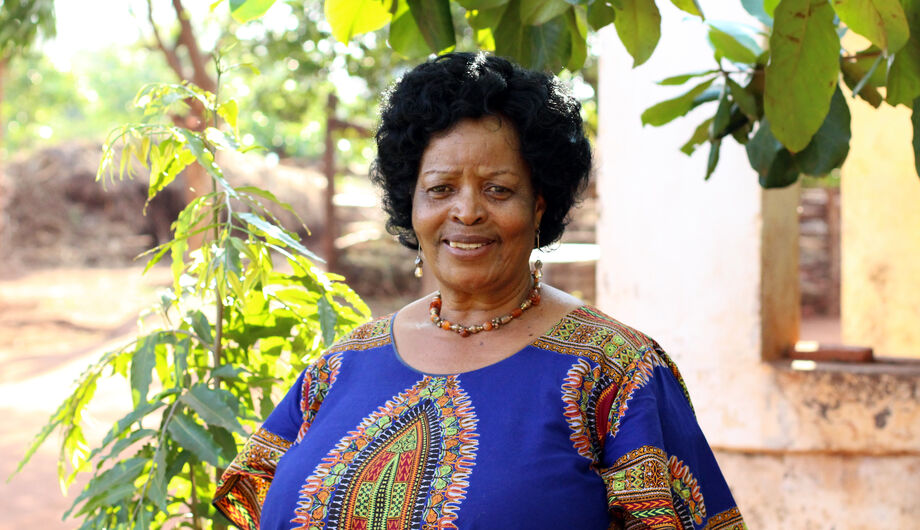
I’m Ida, Senior Chief in Mulanje district, Malawi. I’m dedicated to championing the rights of women and girls in my community—helping them secure their right to education and reach their ambitions.
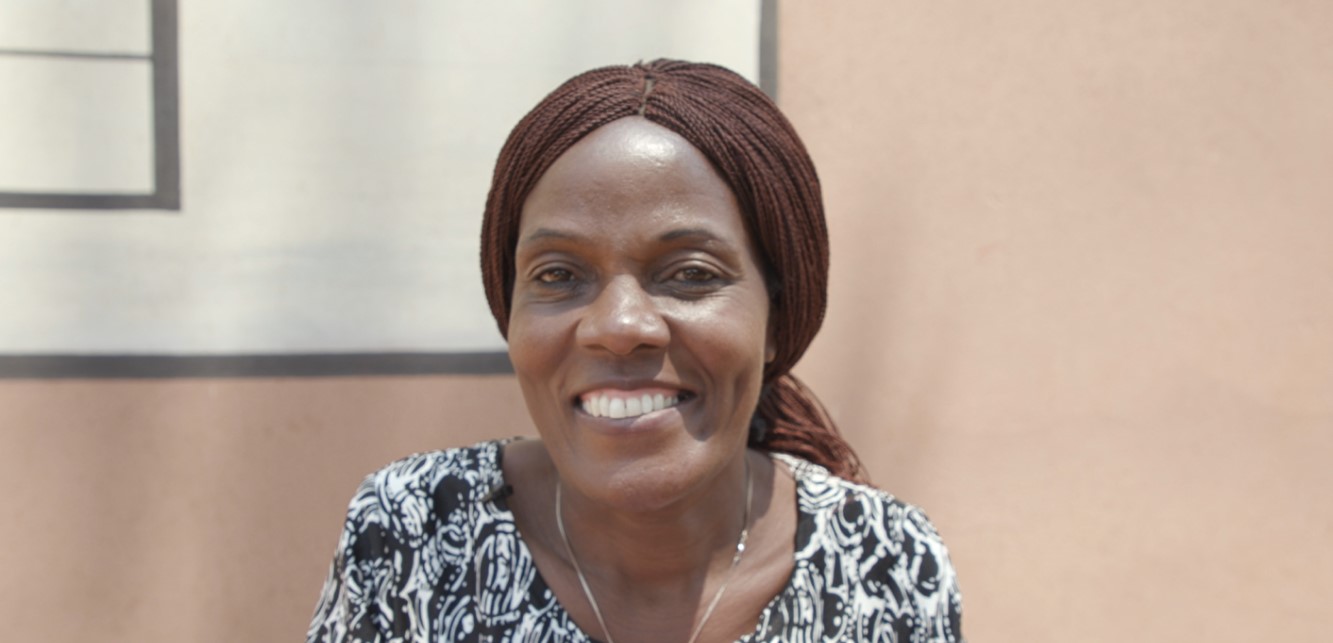
As a Teacher Mentor in rural Zambia for more than 12 years, I’m so happy when I see girls coming to school and being educated. Girls' education is so important, so that girls can be independent.