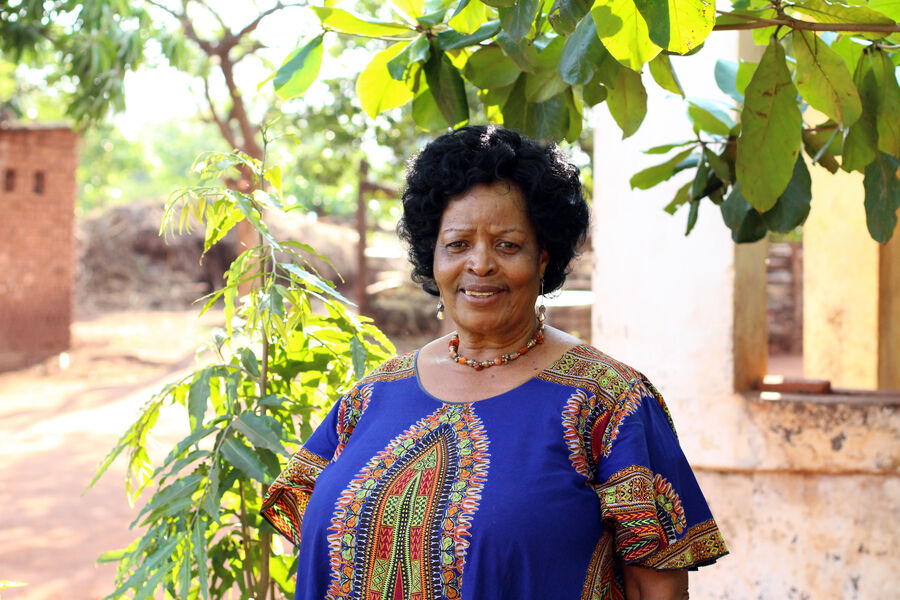
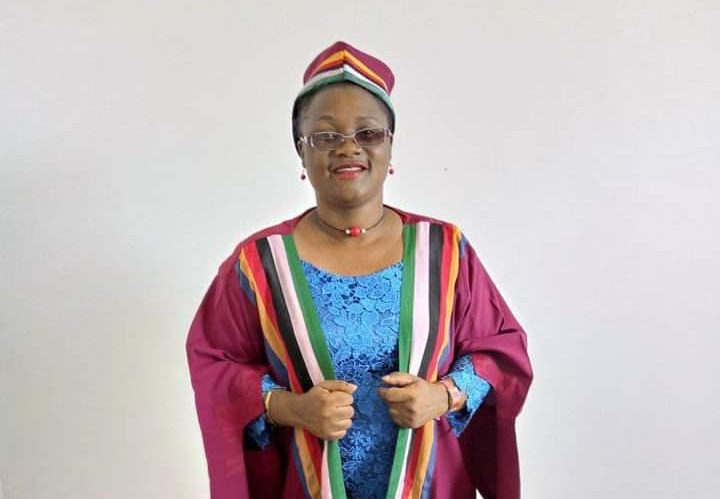
My name is Ida Deleza, and my title is Senior Chief Chikumbu here in Mulanje, Malawi. I’ve been a senior chief since 2014. I’m a teacher by profession, having taught in several schools across Malawi for at least 20 years before becoming a chief.
Growing up, I loved school so much. I enjoyed playing and reading lots of books. I was so happy when I was selected to a girls’ secondary school in Blantyre, which was a national secondary school. I was really excited to go there, and I worked hard to achieve my goals.
After graduating, I went to a secretarial school and then got a job at the district commissioner’s office, but my heart wasn’t in it. Really, my whole passion was for education and I wanted to be a teacher. So after speaking with my parents, I went to a teachers’ training college for three years and after that started teaching, first in Phalombe and then in Mulanje.
Teaching and championing girls’ right to education
While I was a teacher, I was well aware of the issues affecting the welfare of girls. It really hurt me to see a girl having to drop out of school to get married and have an early pregnancy, as a result of poverty. I also remember instances of girls going to work as maids in larger towns. So I said, “No, no. These girls, they need to go to school!”
I started my wider advocacy from the school where I was teaching, asking permission from the Headmaster to talk to all the girls better understand the specific challenges they were facing because of the pressure of poverty and gendered expectations. I could see we had a lot of students in Mulanje failing to go to secondary school, just because they didn’t have the resources.
I dedicate myself to this work because my heart is for education.
It pained me when one day I saw a girl drop out of school to start selling items at the market. I asked her “Why did you leave school?” and she said “At my house I am the sole breadwinner, so I need to do some work to assist my parents.” I asked if I could talk to her parents and find a way to help her go back to school.
At first my actions drew some criticism, but after a while I heard parents saying things like “Look at her, you did a great job;” “Look, my daughter is now a nurse!” and “Look, my daughter is now working!” Ever since then I have had a passion for the rights of girls, and when I first became a chief in 2011, I knew I wanted to champion this with all my heart.
Stepping into my power as a community leader
My mother had been chief of our area before, and after she sadly passed away, I was nominated for the position in 2009. At first I declined the offer because I loved my job so much, and I knew that it was not possible to both work as a teacher and a chief at the same time. But the offer was held, with the message “We need you to be our leader here. You have to look [out] for the whole area,” and eventually I accepted. I was officially elected in 2011.
I retired from teaching and became Chief of Mulanje, serving for 3 years. After that, the Royal Family of Mulanje and the government of Malawi were very happy with all my hard work, and promoted me to Senior Chief in 2014—a position I have held ever since.
CAMFED is working, CAMFED is helping us. I’m happy with the assistance they are providing to girls.
Partnering with CAMFED to nurture the next generation of women leaders
I was introduced to CAMFED when they asked me to be part of the Community Development Committee (CDC)* in my district and I said “Yes, I’ll work hard!” I feel proud to be in the CDC, and I’m very active, doing counseling in many schools across the district. CAMFED is working well in our area, assisting the most vulnerable ones—especially girls.
When the selection for CAMFED support is happening, we CDC members do the monitoring and checks on selection. Whenever there is distribution of school supplies for CAMFED students, I go to the schools to help oversee. Together with members of the CAMFED Association—the network of young women educated with CAMFED support—I counsel the girls and see how they are doing.
I am also involved in procurement of school supplies for the students under CAMFED support, as Chair of the Procurement Committee, and I’m currently the Vice-Chair of the CAMFED Malawi Board. So I’ve been engaged in a lot of activities with CAMFED! I dedicate myself to this work because my heart is for education and I need to be exemplary.
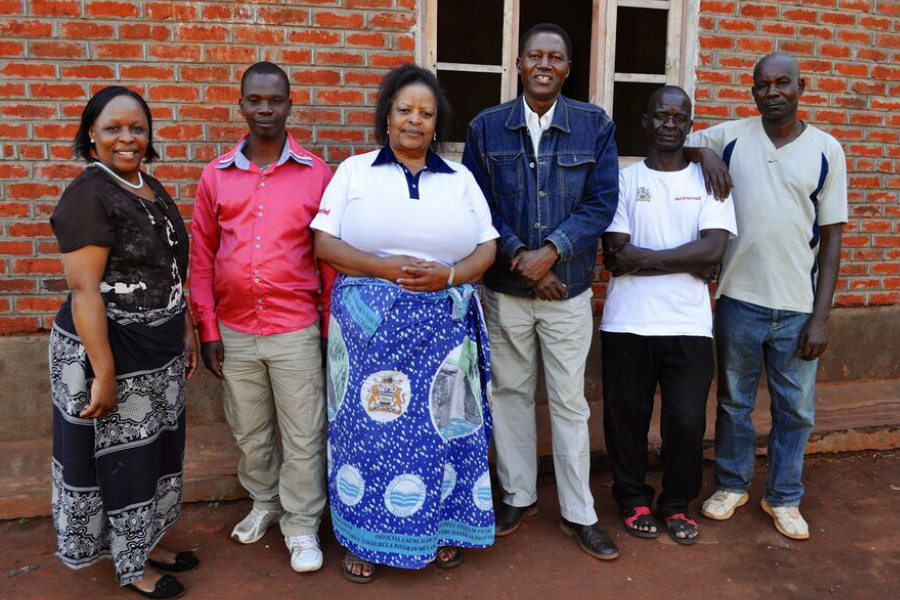
I’ve known CAMFED for a long time! Here I am back in 2018 with other traditional leaders and local champions in Malawi. (Credit: CAMFED/Patrick Hayes)
Many of the young women in the CAMFED Association are very active in our communities. Many of them are doing well in business. For example, a young woman named Ida is doing particularly well, selling food and running a welding workshop. She has about 25 employees and she is doing a lot!
One day I saw a CAMFED Association member who is from this area talking to girls and their parents about the benefits of school. I really clapped my hands for her, she impressed me so much! After the meeting I asked if she could do the same for more community groups. We need these young women to be the role models in the area!
CAMFED is working well in our area, assisting the most vulnerable ones—especially girls.
As a senior chief, I use my authority for the benefit of the wider community. One example has been in the introduction and enforcement of bylaws. I worked with representatives from the social welfare office, the police, schools, and others to introduce and enforce local bylaws that help prevent girls being excluded from school due to early pregnancies. Almost every month I go on the community radio station to remind people about the bylaws. If you don’t comply with the bylaws, you get a fine. Since the introduction, there have been five girls who have gone back to school due to the enforcement of the bylaws.
If a person has got education, they are rich. They are rich, not only in their welfare, but they are rich in their minds—everywhere they are rich!
I think it is very important for women to take up leadership positions. For example, in Malawi, we elected a president who was a woman — Joyce Banda — that made us so proud. She had a passion to help other women in the villages across Malawi. When a woman is in a position of leadership, she has got a passion for everyone. Not only for her family, but for everyone.
In Mulanje we have a lot of meetings, and many of those who attend the meetings are women, they are the ones who take back important messages to their communities.
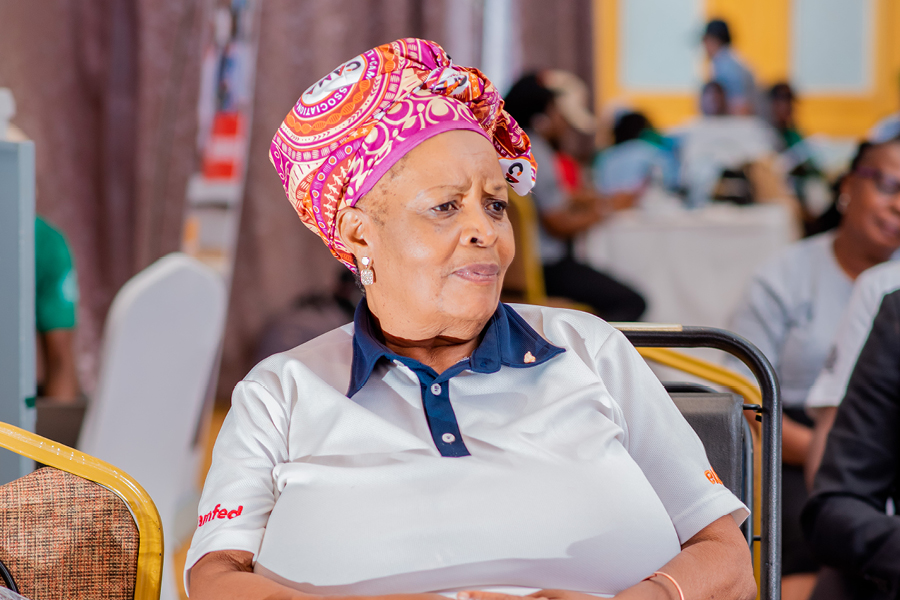
Here I am at a CAMFED Malawi event in Lilongwe, celebrating the launch of support for more secondary school and university students, December 2024. (Credit: CAMFED/Starlight Media)
If you think education is expensive, try ignorance. Ignorance is much more expensive than education!
In addition to my activism and promotion of education, I do a lot of community give-back. Here at my house, I’ve got about 21 people I’m feeding daily, not weekly, but daily. I have also supported many children through school over the years. Currently, I am paying school fees for a girl at primary school, and for a girl and a boy at secondary school.
It brings me so much joy to see the girls and boys I taught in school, now out in the world. Some are in the police, some are traffic officers, some work in immigration, one is now a nurse. I get over excited because of that! To see a girl I brought back to school who is now working, makes me very happy.
*Community Development Committees (CDCs) are the team of government ministry representatives, police, parents, schools, traditional leaders and district CAMFED Association leaders, who oversee and support the management of CAMFED’s programs at district level.
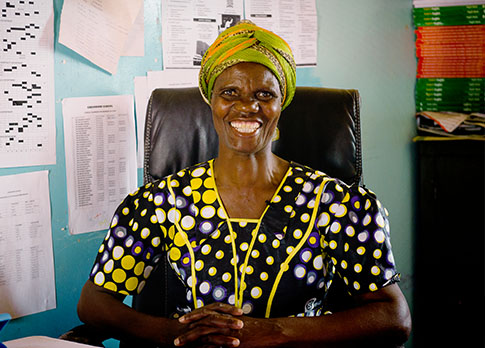
Headwoman Kalima is a farmer, traditional leader, and CAMFED Community Champion, overseeing the activities in her rural village in Zambia. She is actively involved in the local school, meeting with teachers, parents and other community members to discuss issues faced by students.
I am proud of being a businesswoman. I am proud of being a leader. I am proud of how CAMFED has shaped my life and the role model I’ve become. I love my job as Vice Chairperson of Kibaha Rural District Council, and I am happy to be making life better for women and girls in my community.