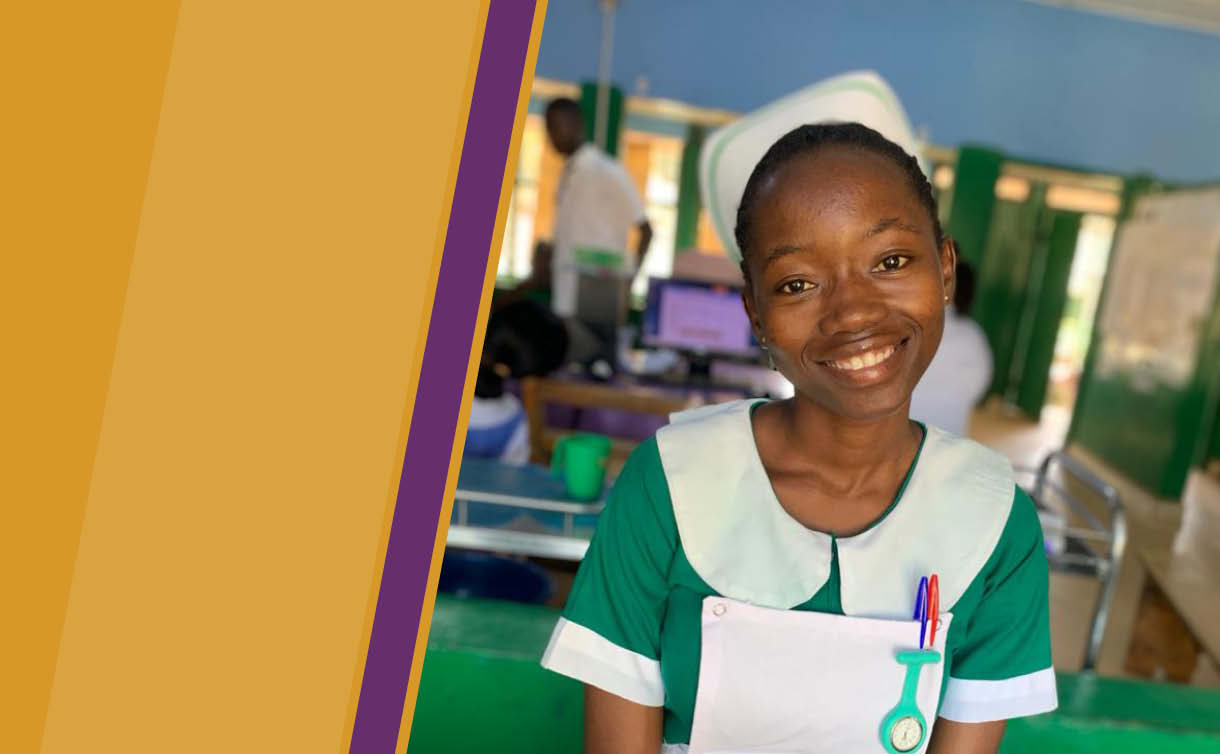
As an educated leader and passionate health advocate, I am transforming lives and shaping a better, healthier future for generations to come.
Growing up in rural Ghana, my parents depended on farming to support our family of seven children. This required a lot of hard work and perseverance, and life was tough at times.
I went to live with my older sister, so I could attend a better school near her home, but my challenges persisted. My family understood the importance of education, yet I knew they would struggle to cover the extra costs that came with senior high school, such as uniforms.
Everything changed when CAMFED stepped in to provide what I needed to thrive in school, from menstrual pads to groceries. I felt deeply inspired to fulfill my potential, knowing that opportunities like this were rare for girls like me. My family was overjoyed, and I was relieved it eased their financial burden–especially since my twin brother was also attending senior high school.
CAMFED’s support helped me see life beyond my immediate environment. The opportunities I gained inspired me to learn, lead, and motivate others.
After completing senior high school with support from CAMFED and the Mastercard Foundation, I pursued a nursing qualification and joined the CAMFED Association – a sisterhood of leaders across Africa educated with CAMFED’s support.
It is deeply inspiring to belong to a network where we share similar stories and a common purpose – to uplift others and break barriers for women and girls. I have gained the confidence to speak up about issues affecting rural communities, especially vulnerable girls.
Together, we advocate for quality education and healthcare while leading initiatives that contribute to community development.
Every CAMFED Association sister is a source of inspiration and encouragement. Their achievements motivate me to keep making a meaningful difference in my community.
Stepping up as a “big sister” and role model
Although I was fortunate to have role models in my family and the CAMFED network guiding me through education, many girls in my community still lack someone they can look up to. This inspired me to volunteer at my local senior high school as a Learner Guide (peer mentor), delivering My Better World life-skills sessions and mentoring vulnerable students.
I have served in this powerful role for over 10 years, even though the usual commitment is for about 18 months. Along this journey, I have learned to listen without judgement and lead with empathy and patience. Having the opportunity to inspire growth and shape a better future for others is a privilege I hold dearly.
During my tenure, I have seen the Learner Guide program grow and flourish. I contributed to the co-creation of a digital Hub that now helps thousands of young women access the materials and support we need. It’s also been exciting that CAMFED’s government partners have started to integrate elements of the program at national level, as part of collective efforts to benefit all students in secondary education. In my district, I’ve met two Learner Guides recruited through these partnerships who share our commitment to supporting learners.
Being a Learner Guide has strengthened my emotional intelligence, self-awareness, and ability to understand others — qualities that continue to shape my leadership.
During mentoring sessions, I inspire rural girls to look beyond their circumstances, stay focused, and believe in their potential.
In 2021, I channeled my passion for youth mentorship into launching the WillMa Youth Club – a safe space that nurtures young people’s leadership potential and drives sustainable development initiatives. Through mentorship, volunteerism, and collaboration, we equip youth with the confidence, skills, and sense of purpose needed to contribute meaningfully to society. The club is supported by fellow CAMFED Association sisters, who contribute their resources and expertise to maximize our impact.
I have provided guidance and mentoring to over 1,000 students, supporting them in their education, careers, and personal development.
Beyond my role as a Learner Guide and mentor, I have financially supported two young women to pay their university tuition fees to study Nursing, and provided a male technical student with the learning materials he needed to succeed.
Strengthening health in my community and beyond
One of the most pressing challenges facing rural communities like mine is the lack of access to quality healthcare, largely due to poor road networks and a shortage of qualified health professionals. Women and girls are especially affected, as they often lack access to reproductive and menstrual health services, as well as maternal and neonatal care — putting them at risk of serious health complications during and after pregnancy.
Although my mother never had the opportunity to receive a formal education, she has saved the lives of countless mothers and babies as a traditional birth attendant and led numerous initiatives to improve maternal and child health and nutrition in our community. Her compassion and service inspired me to become a nurse, so I can continue helping those who lack access to proper healthcare.
When girls are educated, they can make informed choices about their menstrual, sexual, reproductive, and mental health — and help others do the same.
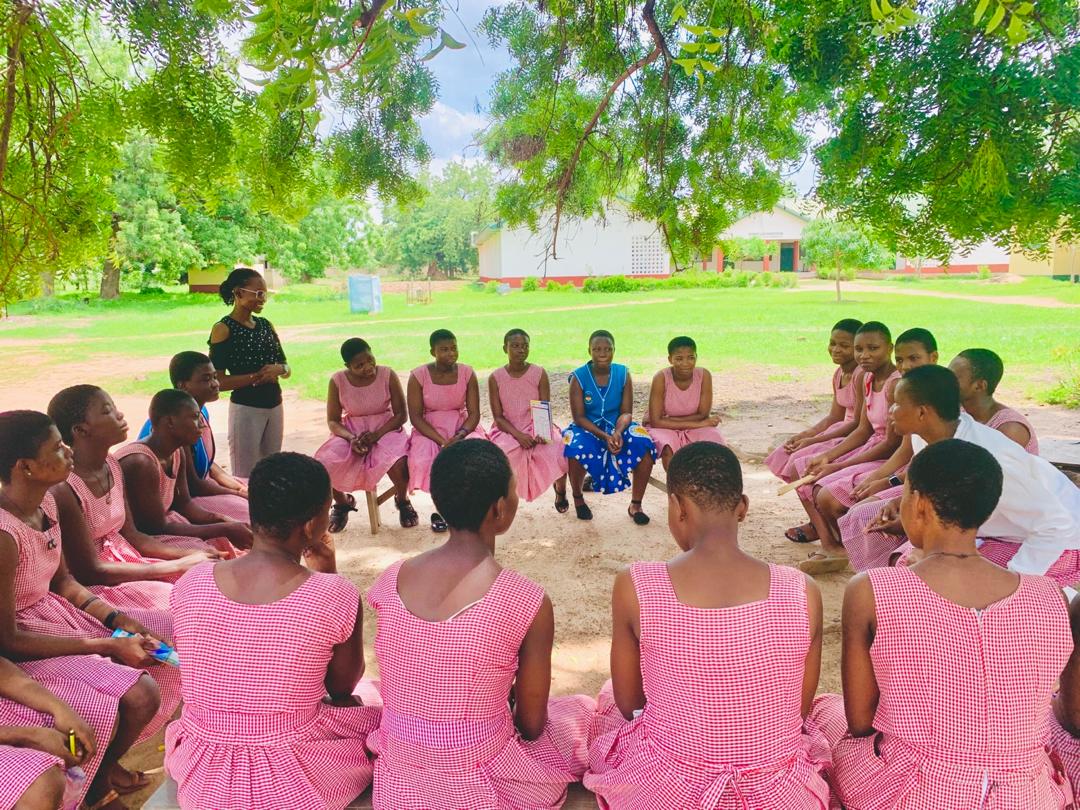
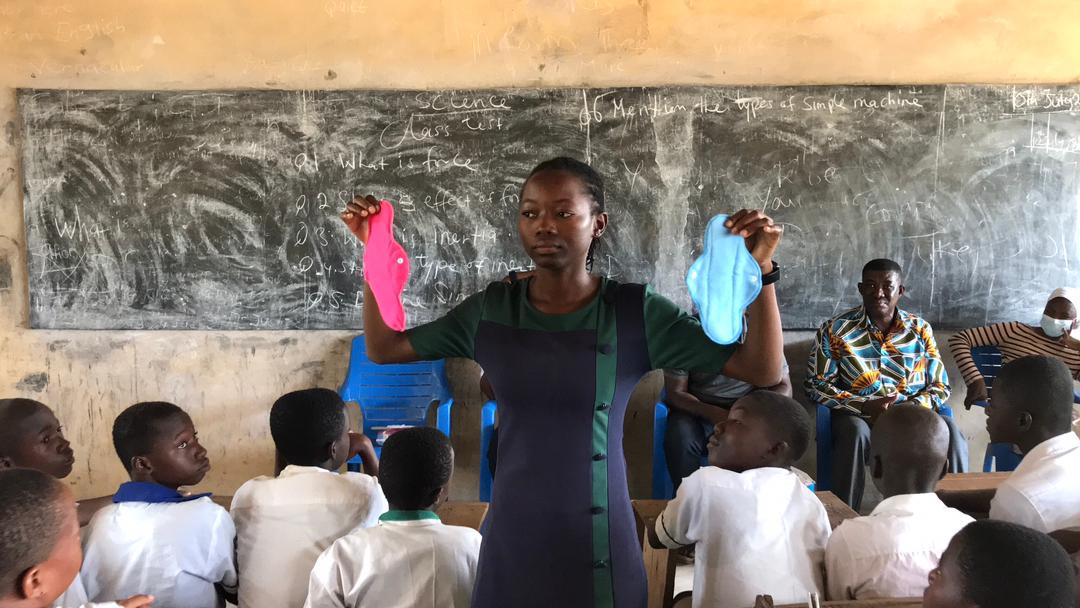
My proudest achievement as a nurse so far has been my advocacy work in championing sexual and reproductive health (SRH) education. Many young people confide in me about their concerns, especially around irregular menstrual cycles. By raising awareness about menstrual health and offering counseling, I have helped many girls to understand their bodies, track their cycles, and embrace healthy practices.
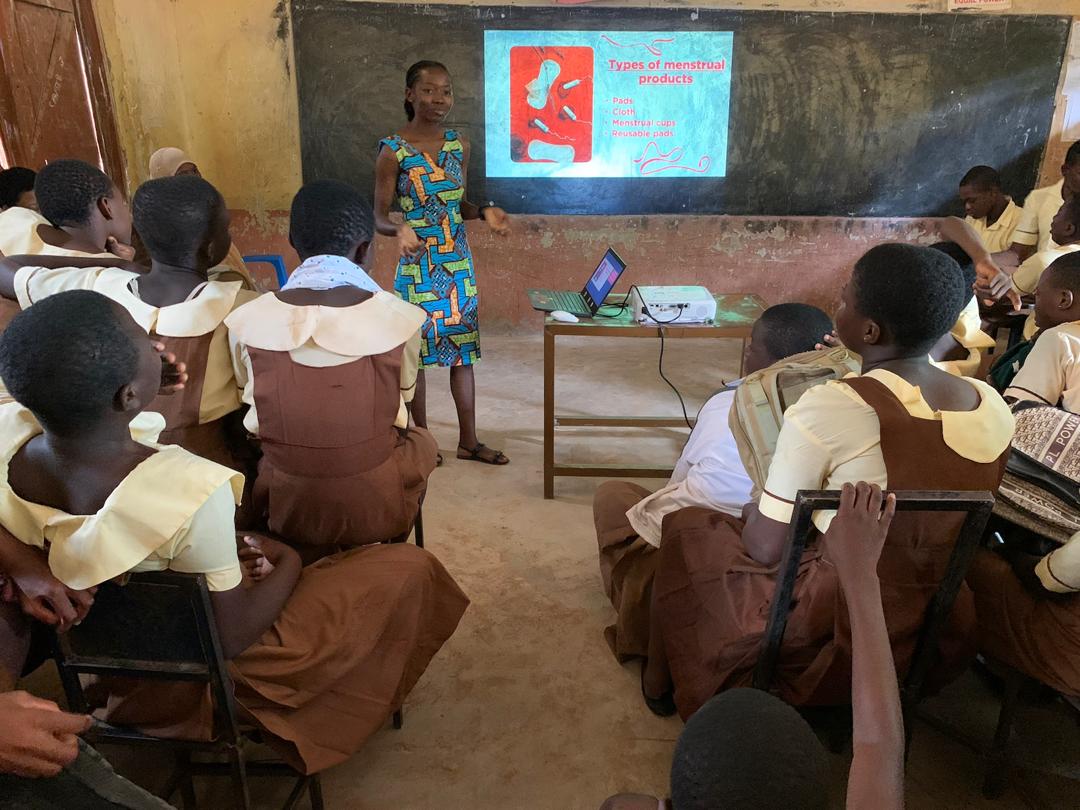
Here I am leading a menstrual health session at a junior high school.
As a result of my advocacy, there is growing confidence among girls to discuss menstrual health openly. They now manage menstruation safely and remain in school during their period.
Recognizing the high cost and environmental impact of disposable menstrual products, I launched an initiative to train mothers and students to produce reusable pads. We educated them on how to clean and store the pads to keep them dry and safe to use.
I have also led SRH education initiatives together with my CAMFED sisters, reaching over 1,000 students with vital information and distributing reusable pads to more than 100 girls. We actively involve boys in our outreach to foster openness, normalize discussions on SRH, and promote gender equality. By engaging traditional leaders and community members, we have gained their support, and now many join us in promoting the health and wellbeing of girls and women.
I promote the use of reusable pads to combat period poverty in my community and protect the environment.
As CAMFED Association District Chairperson in Lambussie, I collaborate with my CAMFED Association sisters and our partners to host radio discussions and advocate for wider support for girls’ and women’s health initiatives. I also lead discussions in my community to advocate for girls’ education and raise awareness of health issues, such as breast cancer.
In the CAMFED Association, we don’t do things in isolation — we work as a body partnering with others who champion women and girls.
Shaping a healthy future for everyone
My work as a mentor and community leader helped me gain the confidence to step up as a Nursing Preceptor (instructor) for over 500 nursing students. I play a crucial role in shaping the next generation of healthcare professionals in Ghana through practical learning and professional growth. In the future, I hope to continue supporting aspiring nurses to achieve their dreams.
Driven by a commitment to preventive healthcare, I am passionate about investigating ways to reduce common health challenges related to menstrual health and pregnancy. My goal is to pursue a MPhil in Nursing to contribute clinical research that strengthens health systems. I believe this research will go a long way to relieve financial strain on families as well as local and global health systems.
To me, hope means believing in every little progress toward a better future. I see hope reflected in the young people I mentor, as well as the partners we work with every day.
Investing in the lives of young people, most especially girls in rural communities, requires collective efforts. Together, we can break the cycle of poverty and shape a better, healthier future for generations to come.
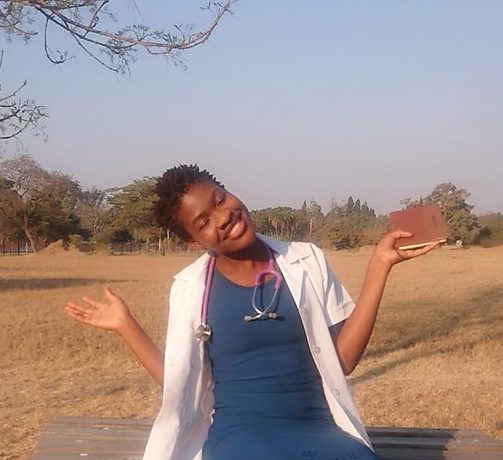
I’m Tendai from Zimbabwe. CAMFED supported me through school, but illness almost held me back. I persevered and now am studying to become a medical doctor. I want my achievement to benefit my fellow CAMFED Association members, and it should be seen as my community’s achievement.
I hope my story will be a huge encouragement to many - showing a person living with a disability who has accomplished much in life. I like to say: “Never be afraid to show the world who you are and what you are made of.”