Keeping girls in school and out of child marriage
CAMFED’s Learner Guides - supporting young women to learn, thrive and lead change
To address these interconnected issues, and improve educational outcomes for the most marginalized children, CAMFED trains young women school graduates in Malawi, Tanzania, Zimbabwe, Ghana and Zambia as Learner Guides.
Learner Guides are role models and mentors, whose own experience means that they understand the challenges many students face -- including grief through the loss of close family members, and the pressure to marry young.
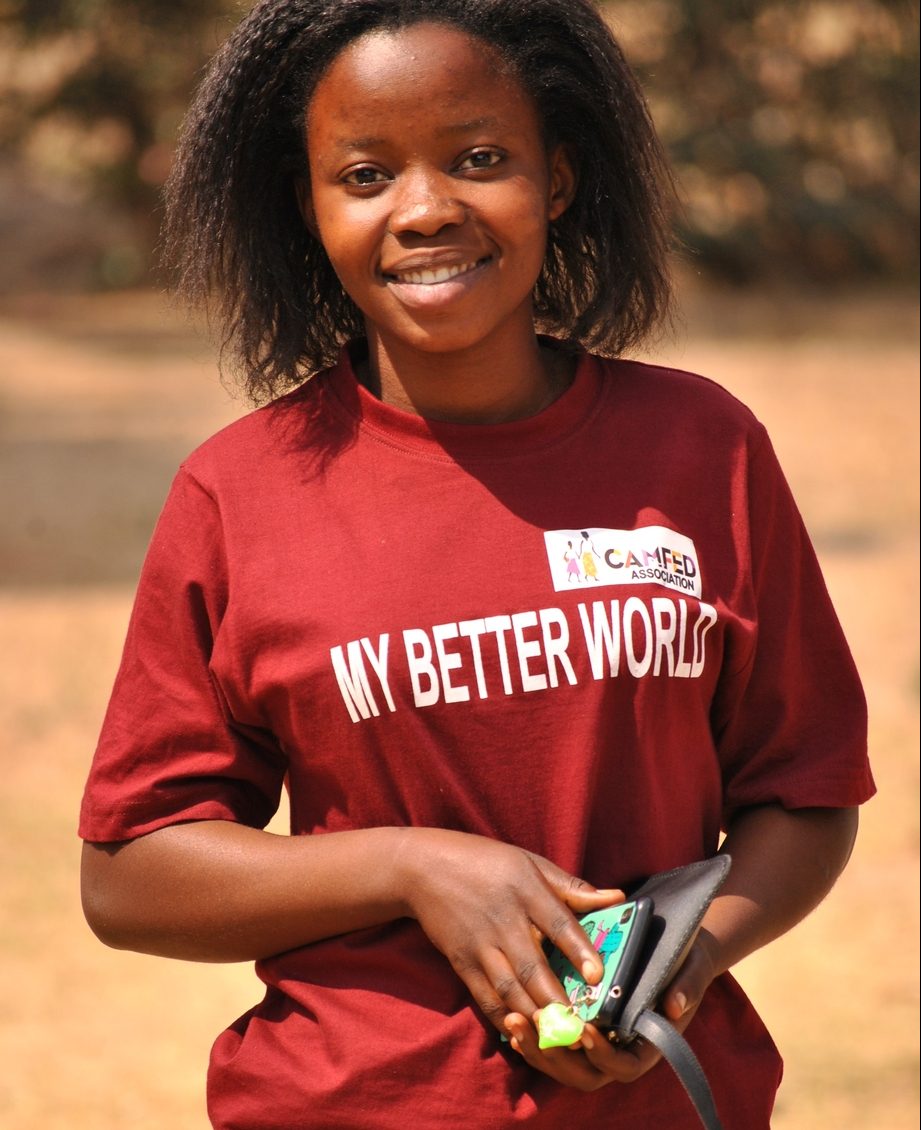
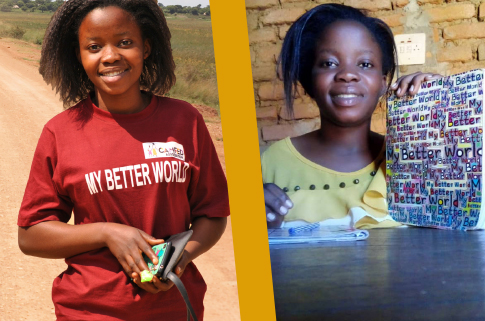
Learner Guides return to their local schools and deliver a bespoke life skills and wellbeing curriculum, My Better World, which aims to improve educational outcomes for children, particularly the most vulnerable. Beyond the classroom, they create an important home-school link, following up with children who drop out of school and working with communities to keep vulnerable girls safe from child marriage.

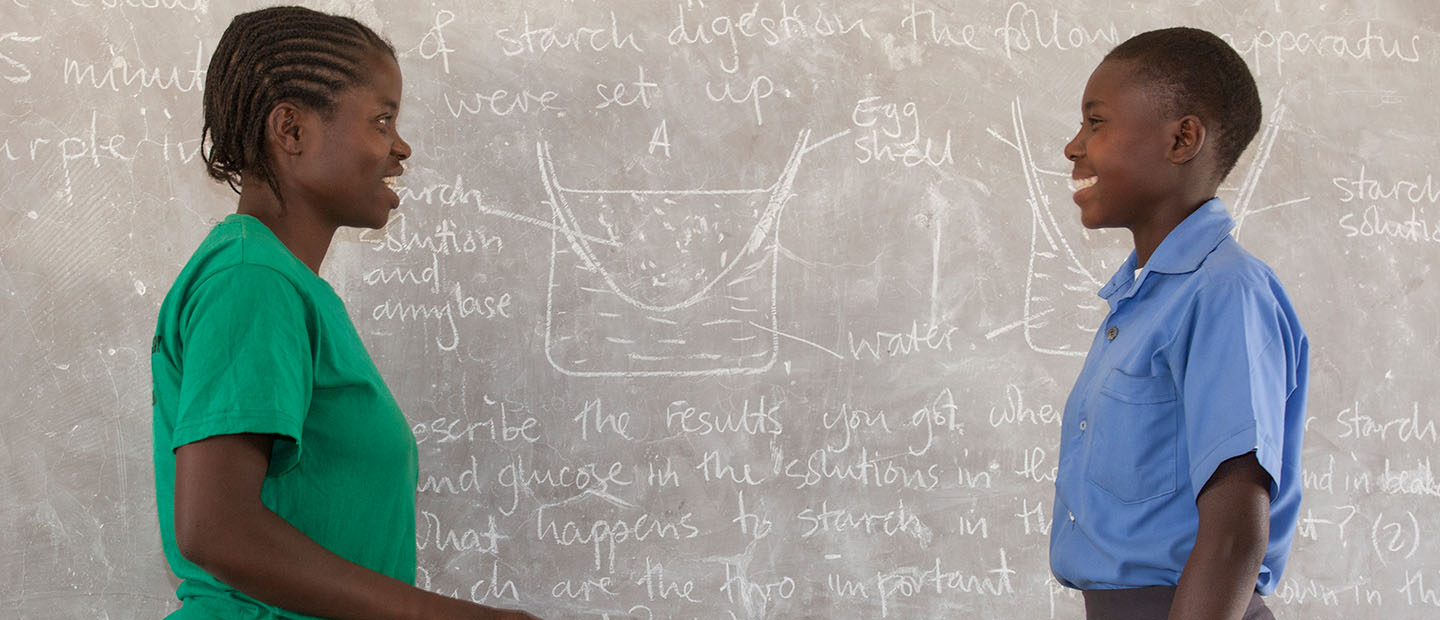
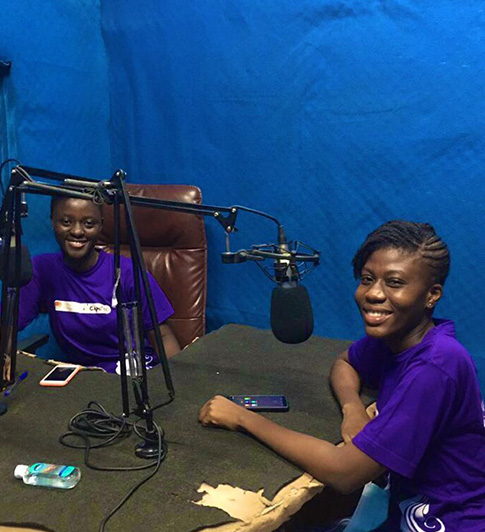
Learner Guides are 'big sisters,' in whom children can confide, and who children can look up to. They bring their lived experience and expertise back to their local schools, supporting overstretched teachers, while themselves gaining the confidence and leadership skills to develop new opportunities for themselves and their families.
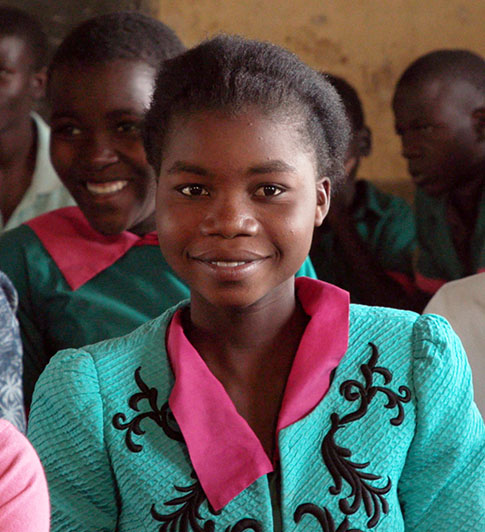
“I couldn’t tell people about the things I was going through, things that had happened to me. I didn’t feel free to tell anybody. I used to sit in the corner of the classroom and cry. But from the day I started learning [with] the My Better World book, it has changed me. I am able to stand up in front of people, talk on my behalf, stand up for myself, so thank you for the My Better World class.”
- Student in a Learner Guide session in Zambia
The Learner Guide commitment is incentivised by an innovative and sustainable scheme that supports young women in making their own next steps at the same time as helping children at school: in return for their 18-month volunteer commitment, Learner Guides gain access to interest-free loans to start local businesses (recognising their volunteering as ‘social interest’) and the opportunity to secure a vocational (BTEC) qualification as a stepping stone to formal teacher training or employment.

From 11 October 2017 to 10 January 2018 CAMFED partnered with the UK Department for International Development (DFID) on a public UK Aid Match appeal to raise awareness of the issue of child marriage in sub-Saharan Africa and introduce CAMFED’s unique solution. We raised a total of £2,780,616.03 during the appeal, including match funding from the UK government of £1,332,267.91 on donations by private UK residents. The money raised is supporting a project that will enable more than 16,000 marginalized girls in rural areas of Zambia who are at high risk of early marriage to continue their education at their local secondary schools. They will benefit from the mentoring support of a network of young women school graduates like Eness, Naomi and Liana (featured in the video below), who are joining with local government and community authorities to uphold girls’ rights and ensure they have the necessary support to attend school and succeed.
The training of these young women graduates, who are members of the CAMFED Association, as Learner Guides (or GirlGuardians, as they were known during the UK Aid Match appeal) took place in February 2019. Learner Guides have been delivering the My Better World life skills and wellbeing curriculum since March 2019, across 15 rural districts in Zambia, guiding and mentoring students, and acting to prevent child marriages:
![]() |
|
Learner Guides have been trained |
|
|
![]() |
|
schools have implemented the program |
|
|
![]() |
|
marginalized children |
|
|
![]() |
|
bicycles supplied for |
|
|
The young women in the CAMFED Association, who were once themselves excluded from education and at risk of becoming child brides, share a deep commitment to ensuring that all girls in their communities secure their right to education.
As Learner Guides, they possess the tools and resources to support children academically as well as socially. As ‘big sisters’, they go above and beyond to protect girls from marriage and bring them back to school, where others simply may not have the expertise, personal insights, time or resources to persevere.
The My Better World sessions delivered by Learner Guides help build confidence in students, and, through the trust engendered, trigger reporting of child marriage to Learner Guides and school staff.


Learner Guides also run community-based advocacy sessions which use role play to illustrate some of the typical child protection cases that the young women have encountered in their communities, including cases of physical, emotional and sexual abuse, which include child marriage.
The plays are performed to help participants recognize abuse, the damaging impact it has, and how to tackle it. Learner Guides are connected to school and local authorities, and have a child abuse reporting systems, procedures and mechanisms in place.
They work with teachers, traditional leaders, social workers and the police to protect child rights, get to the bottom of abuse cases, including child marriage, and change hearts and minds for good. Learner Guides are unrivalled ambassadors for the life changing power of education, who are gaining the support from powerful and influential traditional leaders.
Meet the Permanent Secretary for Education in Zambia
In his speech celebrating the arrival of bicycles for Learner Guides in 20 Districts in March 2019, the Permanent Secretary for Education in Zambia promised to raise scaling possibilities of the Learner Guide Program with the Minister and said:
“We will stand with you to support this programme, we will stand with you to make sure that it is launched at national level.”
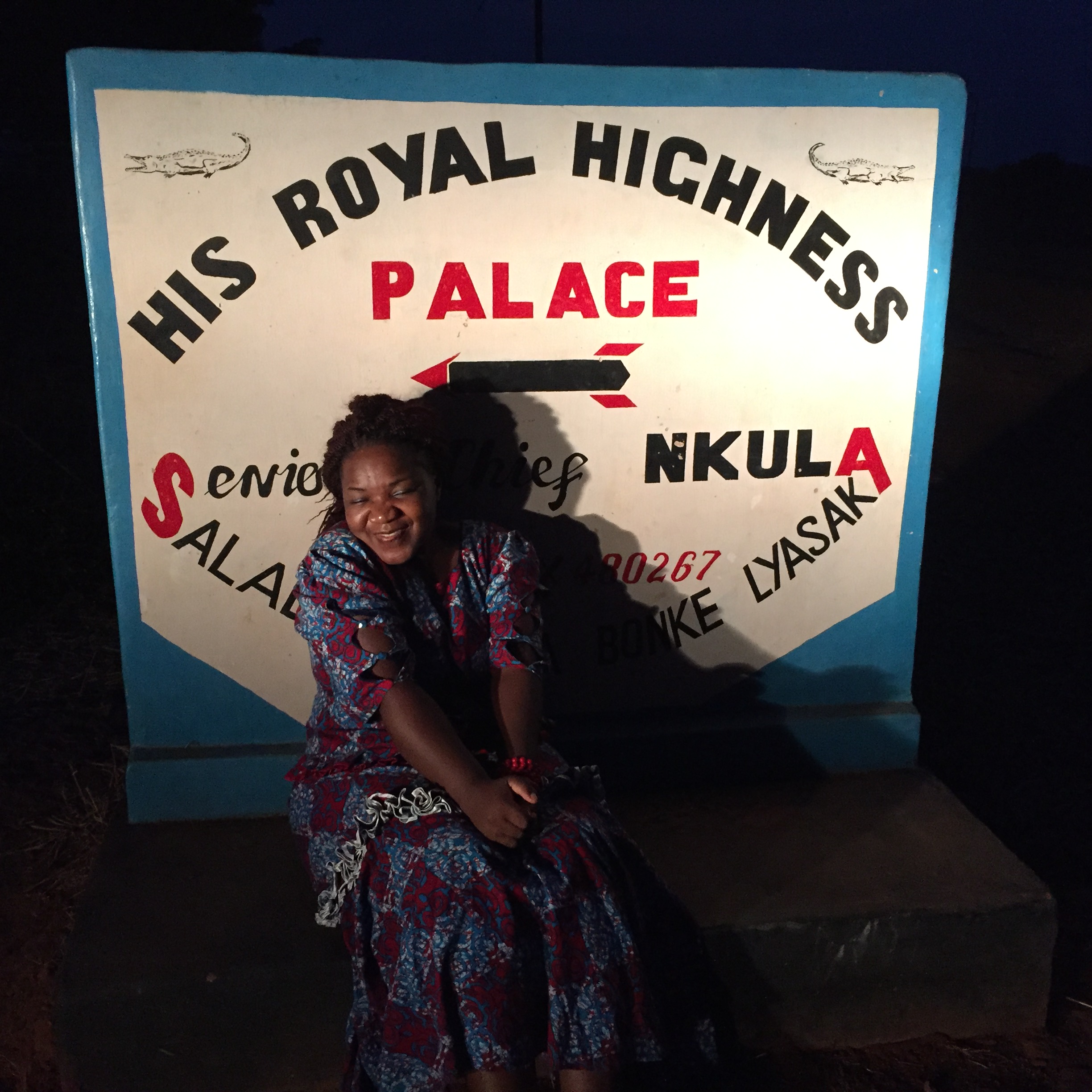
“We visited Chief Kashimba’s palace. He was so welcoming and this made me feel so at ease. We introduced ourselves and what the program was about. He said these were initiatives he wanted in his community and pledged his support. What was more interesting was the fact that he was part of the community sensitization meeting. This gave me the confidence and I told myself, ‘for the Chief to be part of this meeting, it means we are doing the right thing.’”
- Thresah C., Learner Guide in Mwense District, Zambia
“We met Chief Anananga at his palace in Lukulu District. He welcomed us very well and he said he felt honored to see young women like us in his presence. He told us to be free and frank as possible with him. He later told us to invite him whenever we have sensitization meetings, especially concerning a girl child as he had noted an increase in child abuse cases in his area. A lot of people attended the sensitization meetings because we had the Chief’s blessings.”
- Mercy M., Learner Guide in Lukulu District, Zambia
“The experience of meeting Chief Nalisa was so great. Every time we spoke and he nodded his head gave me and my fellow [CAMFED Association] members the confidence to proceed with what we were doing. It was also honoring when he made a commitment to take child protection issues seriously in his chiefdom and he promised that offenders would be severely punished."
- Namatama I., Learner Guide in Sesheke District, Zambia
The Learner Guide Program not only benefits the marginalized children the young women mentor and support — or the wider community they galvanize into action - it also opens up new opportunities for CAMFED Association members, who are being offered teaching roles or other school-based positions as a result of their work.
Because Learner Guides gain access to business training and interest-free loans, paying back their interest through service to their communities, young women are also benefiting by being able to set up growing businesses to support themselves, their families, and other children in their communities, as well as creating local employment. This contributes to increasing the status of women in rural communities, and providing students from a similar background with role models who can help them set - and reach - achievable goals. Through Learner Guides’ success, impoverished families who may have considered early marriage as the only route for girls to have some level of security, can now envision a different future, and see the dividends an education can pay.
CAMFED mostly works in rural communities, where the prevalence of child marriage is significantly greater than in cities, and therefore higher than the national averages indicated below. Please click on the statistic text in each section to expand that section.

1Malawi has the 12th highest child marriage prevalence rate in the world2, although marriage below the age of 18 is now illegal.
Malawi has committed to eliminate child, early and forced marriage by 2030 in line with target 5.3 of the Sustainable Development Goals.3
CAMFED Malawi provided input into the development of the National Strategy on Ending Child Marriages, and worked closely with the Ministry of Gender, Children, Disability and Social Welfare to convene a national meeting to develop a plan of implementation. We also supported the formation of a national by-laws framework to prevent child marriage, and were invited by the Ministry of Education, Science and Technology to join a task force on the National Girls’ Education Strategy.
Importantly, the young women leaders in the CAMFED Association of graduates are now at the forefront of tackling child marriage in their communities, working with schools, parents, education authorities, traditional leaders, social workers and the police to catalyze action for vulnerable girls.
1Malawi Demographic and Health Survey 2015-2016
2 UNICEF
3 Girls not Brides

4Although the legal age of marriage is 21, those aged 16-21 may marry with parental consent, and those under 16 can be married with judicial consent.
In 2016, the Zambian government adopted a National Strategy on Ending Child Marriage (2016-2021) aiming to reduce child marriage by 40% by 2021.5
CAMFED is a member of the Zambian Ministry of General Education’s Technical Working Group on strategies to improve child protection and safeguarding.
Importantly, the young women leaders in the CAMFED Association of graduates are now at the forefront of tackling child marriage in their communities, working with schools, parents, education authorities, traditional leaders, social workers and the police to catalyze action for vulnerable girls.
In 2019, with support from the UK Department of International Development (DFID) and its UK Aid Match scheme, CAMFED launched its Learner Guide program in Zambia. Through the program, which was already operational in Zimbabwe, Tanzania, Ghana, and Malawi, young women school graduates are trained to return to their local schools, deliver a life skills, wellbeing and sexual and reproductive health curriculum, and mentor and support students in their studies, ensuring girls stay in school and out of child marriage.
The program has the full support of the Permanent Secretary of the Ministry of General Education in Zambia, which will be looking at ways to scale the program.
4 UNFPA
5 Girls not Brides

6Tanzania’s Law of Marriage Act (1971) allows for boys to marry at 18 and girls to marry at 15; and as young as 14 if courts approve their request.
Girls under 18 need parental permission to marry. In addition, Customary Laws run parallel to Statutory Laws, allowing each ethnic group to follow and make decisions based on its customs and traditions. A minimum age of marriage is not provided in the constitution. Although the High Court ruled in 2016 that the Act is discriminatory and must be revised, Tanzania’s Attorney General appealed against the ruling in 2017.
However, Tanzania has committed to eliminate child, early and forced marriage by 2030 in line with target 5.3 of the Sustainable Development Goals, and Tanzania is one of 20 countries which has committed to ending child marriage by the end of 2020.7
CAMFED Tanzania contributed to the formulation of the National Plan of Action to end Violence against Women and Children at the invitation of the Ministry of Health, Community Development, Gender, Elderly and Children (MoHCDGEC).
Importantly, the young women leaders in the CAMFED Association of graduates are now at the forefront of tackling child marriage in their communities, working with schools, parents, education authorities, traditional leaders, social workers and the police to catalyze action for vulnerable girls.
In 2018, the Permanent Secretary of MoHCDGEC chose to present CAMFED’s Learner Guide program as best practice in tackling child violence at the End Violence Solutions Summit held in Sweden. In November 2019, as part of the Tanzania Real- time Scaling lab, the program was introduced to 31 members of the Parliamentary Standing Committee for Social Welfare and Community Development, who are looking to scale workable solutions for citizens in their constituencies.
6 Tanzania Demographic, Health and Malaria Indicator Survey 2015-2016
7 Girls not Brides

The legal age of marriage is 18, without exceptions.
8Zimbabwe has committed to eliminate child, early and forced marriage by 2030 in line with target 5.3 of the Sustainable Development Goals. During its Voluntary National Review at the 2017 High Level Political Forum, the government reaffirmed commitment to this target.9
CAMFED Zimbabwe’s position as Chair of the Gender and Disability Committee under the National Education Coalition enables us to advocate for policies to promote equitable, quality education.
Importantly, the young women leaders in the CAMFED Association of graduates are now at the forefront of tackling child marriage in their communities, working with schools, parents, education authorities, traditional leaders, social workers and the police to catalyze action for vulnerable girls.
8 Zimbabwe Demographic and Health Survey 2015
9 Girls not Brides

10Girls in the Northern Region, where CAMFED works, marry at the youngest age, although the legal age of marriage is 18 without exceptions.
Ghana has committed to eliminate child, early and forced marriage by 2030 in line with target 5.3 of the Sustainable Development Goals.
Ghana co-sponsored the 2017 Human Rights Council resolution recognising the need to address child, early and forced marriage in humanitarian contexts, and the 2015 Human Rights Council resolution to end child, early and forced marriage, recognising that it is a violation of human rights.
CAMFED Ghana collaborates with the government to ensure that young women not only stay in school, but see the pathway to independence and business leadership. We signed a Memorandum of Understanding with the National Board for Small Scale Industries (NBSSI) to support training for young women in establishing businesses. In collaboration with the Government’s Guidance and Counselling Unit, CAMFED Ghana developed the Ministry of Education’s five-year Guidance and Counselling Strategic Plan, Teacher Mentor Training Manual and Civic Education Handbook.
Importantly, the young women leaders in the CAMFED Association of graduates are now at the forefront of tackling child marriage in their communities, working with schools, parents, education authorities, traditional leaders, social workers and the police to catalyze action for vulnerable girls.
10 Ghana Demographic and Health Survey 2014
11 Girls not Brides