7 minute read
When I was eight years old, my father passed away. When I was 10, my mother, in an effort to take care of all of the family needs, had to leave our rural village to look for work. My two siblings and I went to live with my aunt, who worked as a shopkeeper and struggled to earn money for us to attend primary school.
It was a nightmare getting shoes or having a proper uniform. I struggled through primary school to completion. I passed with 5 units, excellent results, a sharp contrast to the struggles I suffered!
When I completed primary school with high grades and a desire to continue my education, my aunt told me she couldn’t afford to send me to secondary school. It was at this stage that I was identified by my community as among the most vulnerable children. CAMFED stepped in to provide additional support, covering my secondary school fees.
With that additional support, I became one of the top students in my class. I was accepted into the medical program at the best university in the country, The University of Zimbabwe. Now, I’m a fully qualified medical doctor.
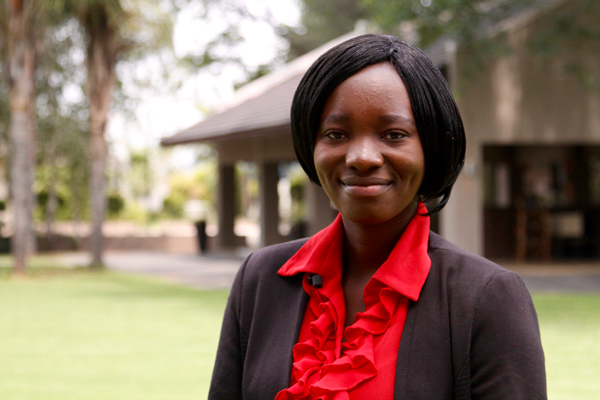
I completed my degree in 2013. In a speech that year at the launch of 24,000 new scholarship places supported by CAMFED in Zimbabwe, I remarked:
Having 24,000 girls like the little insecure and unsure girl I was getting the same chance is a wonderful promise. I foresee communities and our country going far. I see destinies changed and futures brightened. The sky is always the limit when you grab the chance with both hands and you have the support of those closest to you.
My journey to becoming a medical doctor
I decided to become a doctor because where I come from there wasn’t even one. I wanted change for my community because pursuing medicine wasn’t always seen as realistic or possible.
After getting the opportunity to go back to school, I studied hard, pushed through doubt and kept my vision clear – to serve, to represent, and open doors for those coming after me.
I chose to believe impossible was just something that hadn’t been done yet. I am naturally very competitive and I always wanted to be top of all subjects and outstanding. I loved math and biology.
The power of sisterhood
I may have chosen the path to become a doctor but I didn’t walk it alone. I was carried by the sisterhood and CAMFED family at large. Being part of the CAMFED Association — the network of women leaders educated with CAMFED support — did not just impact my education, it shaped my identity and purpose. It connected me to a powerful sisterhood of resilient, ambitious women who understood my background and believed in my potential.
My CAMFED sisters have believed in me sometimes even more than I believed in myself. That kind of love and support to fulfill my dream is something I will never forget.
The CAMFED Association members and Mother Support Group in Gokwe stood behind me in many ways. During the hardest seasons in college, they sent buckets of peanut butter and dried vegetables not just for me but the other six girls I lived with. We survived because women who understood struggle chose to support us.
Caring for community
What I find most rewarding about being a doctor is the direct impact I have on people’s lives, especially those who may otherwise have limited access to healthcare. I chose to spend two years in one of the most remote areas in my country just to fulfil my dream of serving the most marginalized.
Coming from a community where there were no doctors, I understand what it means for patients to finally feel seen, heard and treated with dignity. I am passionate about community based and preventative care and want to pursue oncology and public health medicine.
A great day at work for me is when a patient leaves not only treated but reassured, informed and hopeful. It’s the human connection, not just the clinical outcome that makes the profession deeply meaningful to me.
Overcoming challenges
Due to the lack of access to quality healthcare in rural Zimbabwe, essential medications, diagnostic tools, and specialist support were not always readily available. This directly affected patient outcomes and sometimes required difficult decisions to be made with limited options. It was emotionally challenging to witness preventable complications due to these systemic limitations.
However, those experiences strengthened my resilience and creativity as a clinician. My colleagues and I relied heavily on teamwork, clinical judgement, community support systems, and patient education to bridge the gaps. These environments taught me adaptability, leadership, and the importance of advocacy in healthcare
Girls’ education and health outcomes
Educated girls become informed women who are better equipped to make decisions about their health, family planning, nutrition and their children’s wellbeing. Education increases health literacy, confidence and economic independence, all of which contribute to improved outcomes for women and families.
Women with education are more likely to seek antenatal care early, adhere to treatment plans and advocate for their children’s health. Investing in girls’ education is one of the most powerful public health interventions we have.
Being a role model for others
I mentor young girls when possible and openly share my journey, including my struggles, so they understand that challenges are not signs to stop but part of the process. I have inspired one of my cousins to go into nursing and she is now a qualified nurse.
By simply being a doctor I have shown that it is possible. Representation matters. When girls see someone from their own background succeed in medicine, it expands what they believe is achievable.
I experienced moments of self doubt particularly during medical school and in early years of practice. Coming from a background where becoming a doctor felt almost impossible there were times l questioned whether I truly belong in certain rooms.
When you are the first, or one of the few, it can feel isolating. In those moments, l remind myself why I started. I remind myself of the community that invested in me, the women who sent food when l was struggling, the mentors who carried books across continents, the sisterhood that believed in me long before l believed in myself.
Over time I have learned that self doubt is not a sign of incompetence. It is often a sign of growth. Now, instead of allowing imposter syndrome to silence me, I use it as motivation to prepare, to keep learning and to show up fully – not just for myself but for girls who are watching and dreaming.
I have learnt that success is not individual but collective. Today I see myself as not only a CAMFED client, but as part of a cycle of giving back ensuring that other girls can access the same opportunities that transformed my life.
Looking to the future
I am most proud of breaking barriers that once felt immovable. What makes me hopeful is seeing educated girls become confident women who transform their families and communities. I have witnessed firsthand how investing in one girl can change generations.
I am motivated by the patients whose lives improve because of timely care and compassion. And I am hopeful because more women are entering leadership in health, more communities are valuing girls’ education, and global conversations are increasingly focused on equity in healthcare access.
I hope to continue contributing to a future where quality healthcare is not determined by geography or income, and where every girl no matter where she is born believes her dreams are valid and achievable.